


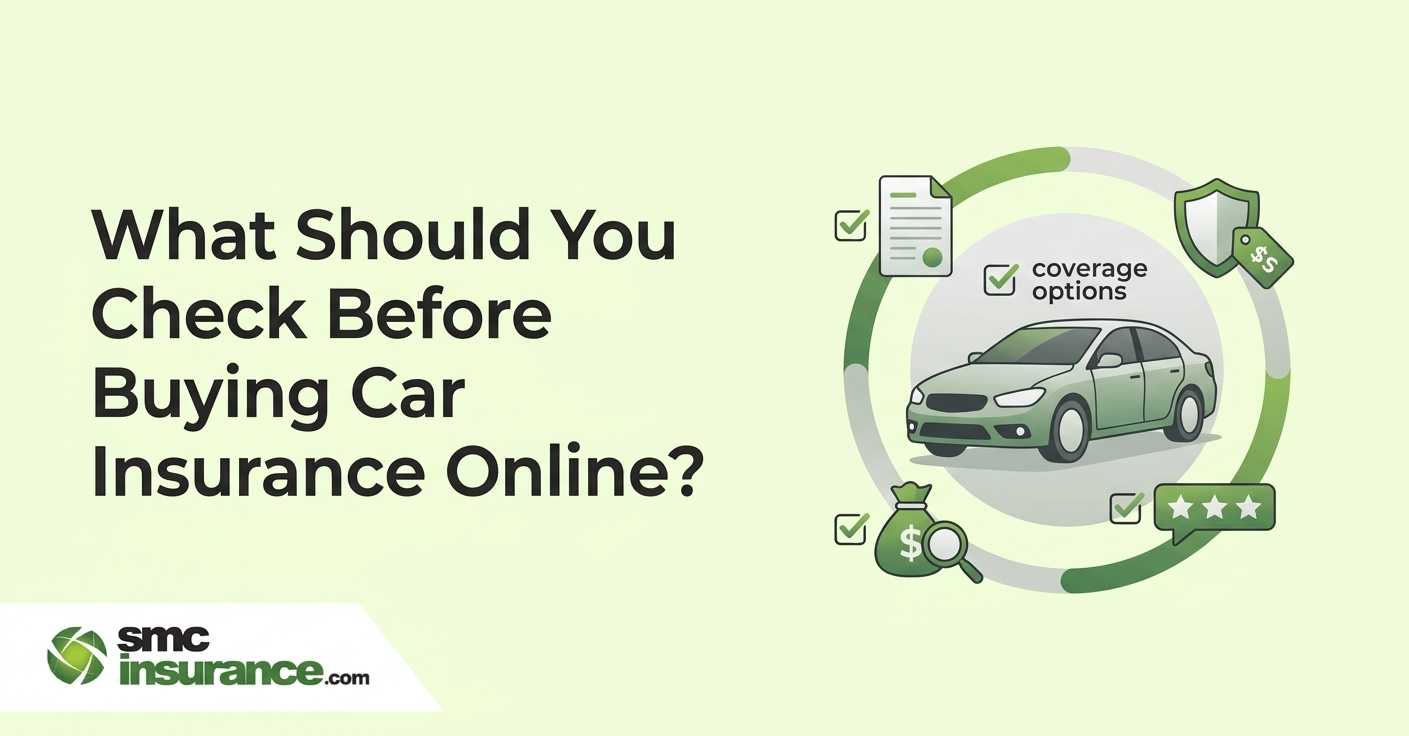
Before buying car insurance online, check coverage type, IDV, add-ons like zero depreciation, claim settlement record, network garages and exclusions. Compare at least three policies, read the policy document and ensure details are accurate before purchase to avoid claim issues later.
A friend of mine bought car insurance online in under 10 minutes. Quick, cheap, done. Or so he thought. Three months later, a minor accident turned into a Rs. 35,000 headache because his policy didn’t cover plastic parts. He had never noticed the fine print.
That gap between buying and understanding is where most first-time buyers get caught. India has over 30 motor insurers, hundreds of plan variations and pricing that swings widely for the same car. The lowest quote can be 40% cheaper than another. That sounds great until you realise what’s missing.
At the end of this article, you’ll have a clear checklist to evaluate car insurance online, avoid costly mistakes and pick a plan that actually works when you need it.
Why Buying Car Insurance Online Feels Simple But Isn’t?
Online platforms make comparison easy. You enter your car number, pick a plan and pay. Done! That simplicity hides layers of decision-making. Coverage types, add-ons, claim ratios, network garages, depreciation rules. Each one affects how much you actually get during a claim. Here, you’re buying a promise that only matters on a bad day.
Understanding The Real Cost Of Car Insurance Online
Price is the first filter. It shouldn’t be the last. Here’s a snapshot of how premiums vary for a mid-range hatchback in India.
|
Policy Type |
Approx Annual Premium (Rs. ) |
Coverage Level |
Best For |
|
Third-party only |
2,500 – 4,000 |
Legal liability only |
Bare minimum legal cover |
|
Comprehensive |
6,000 – 12,000 |
Own damage + third-party |
Balanced protection |
|
Comprehensive + Add-ons |
8,000 – 18,000 |
Extended benefits (zero dep, etc.) |
Full coverage seekers |
Note: Third-party premiums are regulated by IRDAI based on engine capacity, while own-damage premiums are determined by insurers based on risk factors like vehicle age, location and IDV. Always remember that prices vary based on car model, city, age and insurer. Always check live quotes.
The numbers tell a different story. Saving Rs. 3,000 upfront can cost you five times more during a claim.
Quick Tip: Always compare at least three insurers for the same coverage setup. A cheap premium with limited features is not a fair comparison.
Feeling Overwhelmed Comparing Policies?
Most buyers get stuck here. Too many options, too many terms. If you want a clean comparison without missing hidden details, take a look at our plan comparisons at SMC Insurance. It helps break down policies side by side in plain language.
Coverage Type Matters More Than Brand
Let’s break this down properly:
- Third-party vs comprehensive: Third-party insurance is mandatory by law. It covers damage you cause to others. Nothing for your own car. Whereas, comprehensive insurance adds protection for your vehicle. Accidents, theft, natural disasters, vandalism.
Here’s what most people miss. Add-ons can completely change how useful your policy is.
Add-ons:
-
- Zero depreciation cover
- Engine protection
- Roadside assistance
- Return to invoice
Without these, your claim payout drops sharply due to depreciation cuts.
Important Note: Plastic, rubber and nylon parts depreciate by 50%, fibreglass parts by 30%, while metal parts depreciate based on the vehicle’s age. This significantly reduces claim payouts without zero depreciation cover. That’s where most claim disputes begin.
Network Garages Can Save You Thousands
Cashless claims depend on this. Insurers partner with garages where you don’t pay upfront. The insurer settles the bill directly. Check this before buying:
- Number of network garages in your city
- Distance from your home
- Reputation of those garages
A wide network is helpful, but local availability matters more.
IDV: The Number That Decides Your Claim Amount
Insured Declared Value in Car Insurance. This is the maximum amount you’ll receive if your car is stolen or totaled. Lower IDV reduces premium and it also reduces your claim payout. And a higher IDV increases premium slightly but offers better protection.
Here’s the balance. Set IDV close to your car’s market value. Not the lowest option shown. IRDAI prescribes standard depreciation rates for vehicles, such as 5% for cars under 6 months old and up to 50% for cars between 4 to 5 years old, which directly impacts IDV and claim amounts.
Read Exclusions Like You Read Terms For A Loan
Most buyers skip this. That’s where the trouble starts. Common exclusions include:
- Driving without a valid licence
- Drunk driving
- Mechanical breakdown
- Wear and tear
- Consequential loss (damage caused due to continued use of the vehicle after initial damage)
Some policies also exclude engine damage due to water ingress unless you add engine protection. That irony hits hard. People buy insurance for monsoon risks, then find out water damage isn’t covered.
How To Buy Car Insurance Online The Right Way?
This part is straightforward if you follow the sequence.
- Go to the SMC Insurance website.
- On the homepage, click the insurance category you want (for example: “Car Insurance” or “Bike Insurance”).
- You can then enter your registered vehicle number and click on “View Quotes". You also have the option to check quotes by giving the bike number.
- In case of vehicle insurance, the upcoming prompts will ask you for your vehicle details like brand, model, fuel type, variant and respective RTO.
- Once given, you can check the policy start and end date, confirm NCB details and view quotes from various insurers.
- On submission, SMC will display a list of available plans or quotes from partner insurers. You can view plan details like coverage, benefits, inclusions/exclusions, add-ons (if available), insured declared value (for vehicles), etc.
- Compare the available options and consider things like third-party vs comprehensive, add-ons (e.g. zero-depreciation, roadside assistance) as per your needs.
- Once you select the plan you want, click the button labeled “Buy Now”
- Fill out your personal details as required (owner name, address, contact, driving licence/RTO info or health info depending on policy). Ensure all details are accurate.
- Make the payment via the online gateway supported by the website. After payment confirmation you will receive your policy document or certificate electronically (through email or website account).
- Once everything is processed, your insurance policy becomes active. Keep a digital or printed copy of your policy/certificate for future reference.
Throughout the buying process, you have the option to contact the SMC Team for any kind of support you need.
Deductibles: The Part You Pay Every Time
Every claim has a deductible. This is your share of the cost. Two types:
- Compulsory deductible (fixed by IRDAI)
- Voluntary deductible (chosen by you)
Choosing a higher voluntary deductible reduces premium. But you pay more during claims.
If you rarely drive, this might make sense. If you commute daily, it usually doesn’t.
No Claim Bonus (NCB) is Your Hidden Discount
NCB reduces premium for claim-free years. It can go up to 50%. But here’s the detail many miss. NCB belongs to you, not the car. If you switch insurers, carry forward your NCB. Don’t lose it during renewal. NCB can be retained and transferred to a new insurer or a new vehicle, provided the policy is renewed within 90 days of expiry.
Latest IRDAI Updates Affecting Car Insurance (2026)
IRDAI has introduced greater flexibility in motor insurance in recent years:
- Own-damage premiums are no longer fixed and can vary across insurers
- Digital policy issuance and instant renewals are now standard
- Insurers can design customised add-ons under the “Use and File” system
- Policyholder protection has improved through stricter grievance redressal norms
Must-Read Guides From SMC
- Difference Between First-Party and Third-Party in Car Insurance
- Does Car Insurance Cover Engine Damage Due to Flood?
- PUC for Modified Cars & Aftermarket Exhausts in India
- Pre-Delivery Inspection (PDI) Guide
- Factors Affecting Car Insurance Policy Premium
- Features of a Car Insurance Policy
- Types of Car Insurance Policy
Wrapping Up,
Buying car insurance online looks quick. It rarely is, if done right. The premium is only one part of the decision. Coverage, add-ons, IDV and claim experience matter more once something goes wrong. Most mistakes happen in silence. Skipped terms, rushed comparisons, misunderstood features.
Slow down just enough to read what you’re buying. That extra 15 minutes can save thousands later. Your next step is simple. Compare policies with clarity, not just cost.
Disclaimer:The information provided on this platform is intended for general awareness and educational purposes. While every effort is made to ensure accuracy, some details may change with policy updates, regulatory revisions, or insurer-specific modifications. Readers should verify current terms and conditions directly with relevant insurers or through professional consultation before making any decision.
All views and analyses presented are based on publicly available data, internal research, and other sources considered reliable at the time of writing. These do not constitute professional advice, recommendations, or guarantees of any product’s performance. Readers are encouraged to assess the information independently and seek qualified guidance suited to their individual requirements. Customers are advised to review official sales brochures, policy documents, and disclosures before proceeding with any purchase or commitment.
FAQs
Coverage matters more than price. A slightly higher premium with better add-ons and IDV offers stronger financial protection during claims.
Yes, if you use IRDAI-approved insurers or trusted aggregators. Always verify policy details after purchase.
Choose a higher voluntary deductible, maintain a good NCB and avoid unnecessary add-ons. Don’t reduce IDV just to save money.
You need your vehicle registration certificate, previous policy details and basic ID proof. Most insurers issue policies instantly.
Yes, you can switch insurers and still carry forward your No Claim Bonus, provided there’s no break in policy.
Not always. Engine protection is an add-on. Without it, damage from water ingress or oil leakage is usually excluded.


