


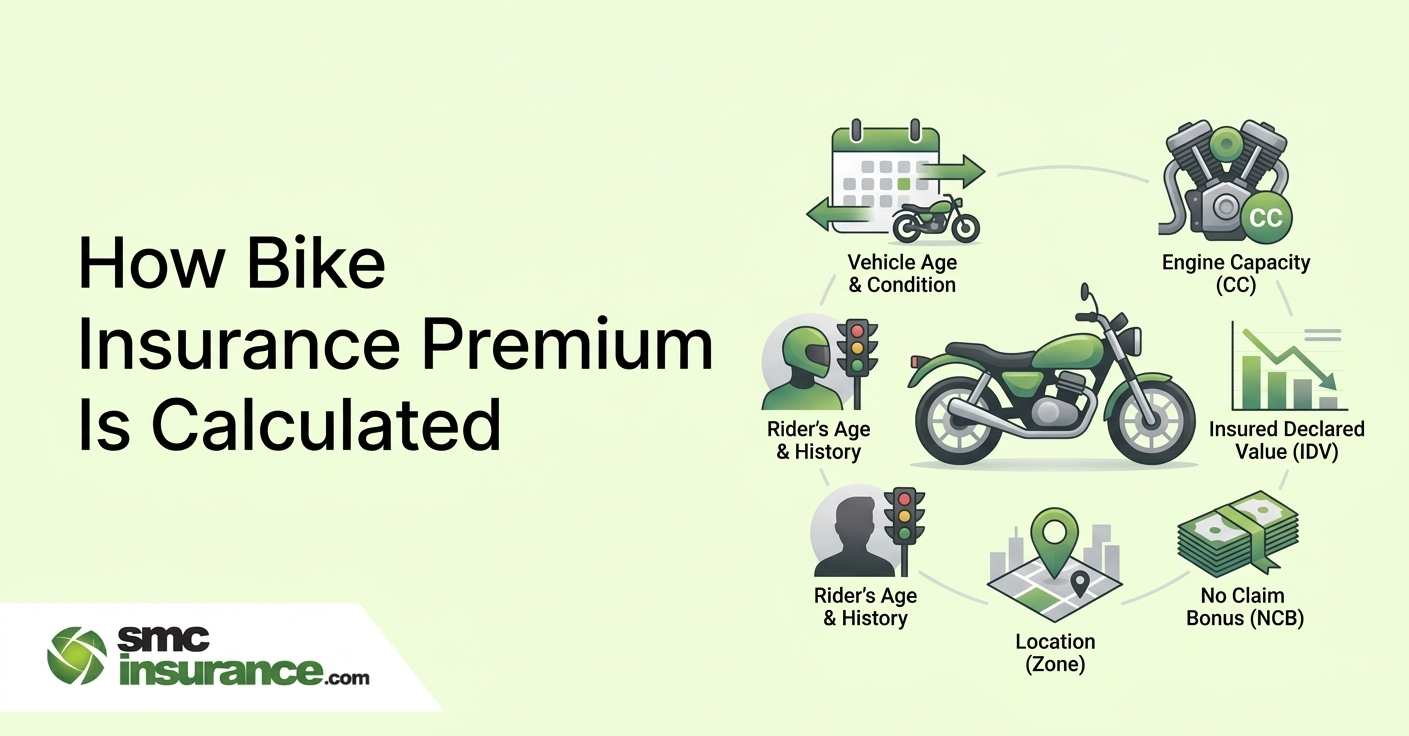

A bike insurance premium is calculated based on several factors such as the bike’s Insured Declared Value (IDV), engine capacity, age of the vehicle, city of registration, and the type of policy chosen. Insurers also consider add-ons and discounts like the No Claim Bonus (NCB), which can reduce the premium if no claims were made in the previous year.
The total premium usually includes two parts: the third-party premium, which is fixed by the regulator based on engine capacity, and the own damage premium, which insurers calculate using the bike’s current market value and risk factors.
Most people remember the day they bought their bike. They get dressed up like a kid on their birthday. Full of smiles, the first ride home. Sometimes even a longer route just to stay on the road a little more. Insurance rarely gets that kind of attention.
It usually enters the picture as paperwork. The dealer includes it with the purchase, the policy document arrives in the inbox and you just take your ride. The curiosity tends to show up later. Maybe during renewal. Maybe when a friend mentions paying a different premium for a similar bike. That’s when the obvious question appears.
What Is a Bike Insurance Premium Really?
At its simplest, a bike insurance premium is the price you pay to keep your bike covered under an insurance policy. In return, the insurer promises financial support if certain situations occur. These situations usually include accidents, theft, fire damage and natural disasters like floods or storms.
There is another side to it as well. If your bike causes damage to someone else’s property or vehicle, or if another person is injured in an accident involving your bike, the policy helps cover that financial liability. So the premium is essentially the cost of transferring that risk to the insurer. But not everyone pays the same amount. Insurance companies calculate premiums after studying several details related to the bike and how it is used.
Before getting into those details, it helps to understand how the premium itself is structured.
How Exactly Is A Bike Insurance Premium Calculated?
The answer is simpler than most riders expect. Insurers follow a fairly clear method. They look at the bike, its current value, the engine size, where it is registered and a few other details. Each of these helps them estimate risk. Once the risk level is understood, the premium is worked out. Understanding this process can actually help riders make better choices when buying or renewing insurance. It also explains why the amount may go up or down over time.
Let’s walk through how it works.
The Two Main Parts of a Bike Insurance Premium
When you look closely at a comprehensive bike insurance policy, the premium is usually divided into two sections. One part protects others on the road. The other protects the bike itself.
|
Component |
What it covers |
|
Third-party cover |
Damage or injury caused to another person or property |
|
Own damage cover |
Damage, theft, or loss involving the insured bike |
These two parts work differently when it comes to pricing.
➔ Third-Party Insurance
Third-party insurance is mandatory in India. The Motor Vehicles Act requires every vehicle to carry at least this basic level of coverage. The idea is straightforward. If your bike causes damage to another person’s vehicle or property, the insurance policy handles the financial liability. But here’s something many riders don’t realize.
Insurance companies don’t decide the price for this part. The premium for third-party insurance is fixed by the Insurance Regulatory and Development Authority of India (IRDAI).
This ensures that the rates remain uniform across insurers. The only factor that changes the cost is engine capacity. In general terms, bikes are placed in slabs based on engine size.
|
Engine capacity |
Premium category |
|
Up to 75 cc |
Lower slab |
|
75 cc to 150 cc |
Moderate slab |
|
150 cc to 350 cc |
Higher slab |
|
Above 350 cc |
Highest slab |
Because these rates are regulated, every insurer charges the same third-party premium for bikes within the same engine category.
➔ Own Damage Cover
The second part of the premium is own damage coverage. This portion protects your bike itself. If the vehicle gets damaged in an accident, stolen, or affected by natural disasters, this coverage helps pay for repairs or replacement. Unlike third-party insurance, insurers calculate this premium themselves. This is why the total premium may differ from one insurer to another or even between two riders with similar bikes. Several factors influence this calculation:
- Insured Declared Value (IDV)
One of the biggest factors in bike insurance pricing is the Insured Declared Value, commonly known as IDV. The IDV represents the current market value of the bike. If the bike is stolen or damaged beyond repair, the insurer settles the claim based on this value. However, bikes lose value as they age. Depreciation gradually reduces their market price. Insurance companies apply standard depreciation rates to estimate the IDV.
|
Age of bike |
Depreciation |
|
Up to 6 months |
5% |
|
6 months to 1 year |
15% |
|
1 to 2 years |
20% |
|
2 to 3 years |
30% |
|
3 to 4 years |
40% |
|
4 to 5 years |
50% |
Because the premium partly depends on IDV, a higher insured value usually leads to a higher premium. This is why insurance for a brand new bike costs more than for an older one.
- Engine Capacity
Engine size plays a role in how insurers view risk. Bikes with larger engines usually have higher performance capabilities. They may also attract a different riding style compared to smaller commuter bikes. Because of this, insurers often associate larger engines with slightly higher accident risk.
For example, a 100 cc commuter bike used for daily travel usually has a lower premium compared to a 400 cc motorcycle. The difference reflects perceived risk rather than just the price of the bike.
- Location of Registration
Where the bike is registered also affects the premium. Insurance companies divide locations into different zones depending on traffic conditions and accident statistics. Large metropolitan cities typically fall into higher risk zones because traffic congestion increases the chances of accidents.
Smaller towns may fall into lower risk zones.
- Age of the Bike
Age influences insurance pricing mainly through depreciation. New bikes have a higher market value. As a result, their insured value is higher. Over time, the bike’s value drops, which reduces the IDV. When that happens, the premium generally decreases as well. However, extremely old bikes can sometimes involve higher repair costs if spare parts become difficult to find.
- Add-On Covers
Many riders choose to enhance their policy with add-ons. Add-ons are optional features that expand the coverage offered by the base policy. Some common examples include: -
- Zero depreciation cover
- Engine protection cover
- Roadside assistance
- Consumables cover
- Return to invoice cover
Each add-on increases the premium slightly. However, these features can reduce the amount a rider has to pay during repairs or claims. For instance, zero depreciation cover allows the insurer to cover the full cost of replaced parts without deducting depreciation.
- No Claim Bonus
Insurance companies encourage safe riding through something called the No Claim Bonus. If a rider completes a policy year without making a claim, the insurer offers a discount during renewal. This discount applies to the own damage premium. The percentage increases with each claim-free year.
|
Claim-free years |
Discount |
|
1 year |
20% |
|
2 years |
25% |
|
3 years |
35% |
|
4 years |
45% |
|
5 years |
50% |
Over time, this bonus can significantly reduce the cost of insurance.
Example of How a Premium Might Be Calculated
Let’s consider a simple example. Imagine a rider named Jagat who owns a two-year-old bike.
- Bike details: Model: 150 cc commuter bike
- Original price: Rs. 1,10,000
- Age: 2 years
- Registration city: Chennai
First, depreciation is applied to estimate the bike’s current value. For a two-year-old bike, depreciation is roughly 20%. So the IDV becomes approximately Rs. 88,000.
Next comes the third-party premium. Since the bike falls in the 75 cc to 150 cc engine category, the standard third-party rate applies. After that, the insurer calculates the own damage premium based on the bike’s insured value. Suppose the rate used by the insurer is around 2% of the IDV. That would make the own damage premium roughly Rs. 1,760.
If Jagat chooses add-ons like roadside assistance or zero depreciation cover, those costs get added to the premium. Now imagine Jagat had not raised any claims during the previous year. In that case, he qualifies for a No Claim Bonus. The discount reduces the own damage premium.
After applying the discount and adding taxes, the final premium appears on the quote. This is the amount Jagat would pay to renew his policy.
Must-Read Guides From SMC
- Best Bike Insurance Company in India
- Check Bike PUC Status Online
- Check Bike RTO Details
- What Happens If Bike Insurance Expires?
- How To Renew Your Expired Bike Insurance Online?
- Why 90% of Bike Theft Claims Are Rejected
- Does a Modified Exhaust Void Car or Bike Insurance in India
- Top Reasons for Bike Insurance Claim Rejection
- How to Transfer Bike Insurance After Selling the Bike
Summing Up,
Bike insurance premiums are based on measurable factors that help insurers estimate risk. The bike’s value, engine capacity, location, age and claim history all contribute to the final premium. Once these elements become clear, the pricing structure starts making sense.
For riders, understanding how the premium is calculated can be surprisingly useful. It helps in choosing the right coverage, maintaining discounts like the No Claim Bonus and comparing policies more effectively. Insurance may not be the most exciting part of owning a bike. But when something unexpected happens on the road, the right policy can make a huge difference.
Disclaimer:The information provided on this platform is intended for general awareness and educational purposes. While every effort is made to ensure accuracy, some details may change with policy updates, regulatory revisions, or insurer-specific modifications. Readers should verify current terms and conditions directly with relevant insurers or through professional consultation before making any decision.
All views and analyses presented are based on publicly available data, internal research, and other sources considered reliable at the time of writing. These do not constitute professional advice, recommendations, or guarantees of any product’s performance. Readers are encouraged to assess the information independently and seek qualified guidance suited to their individual requirements. Customers are advised to review official sales brochures, policy documents, and disclosures before proceeding with any purchase or commitment.
FAQs
Several factors influence the premium amount. These include the bike’s Insured Declared Value (IDV), engine capacity, age of the bike, city of registration, policy type, and claim history. Optional add-ons and discounts like the No Claim Bonus can also change the final premium.
IDV stands for Insured Declared Value. It represents the current market value of your bike. If the bike is stolen or damaged beyond repair, the insurer settles the claim based on this amount.
Yes, engine capacity plays an important role in premium calculation. Bikes with larger engines are often associated with higher risk, so they usually attract higher premiums compared to smaller commuter bikes.
No Claim Bonus is a reward given by insurers for not raising any claims during the policy year. It provides a discount on the own damage premium during renewal. The discount increases with each claim-free year.
You can check your premium using an online bike insurance calculator. By entering details such as your bike model, registration year, and location, the calculator quickly shows the estimated premium. This also helps you compare plans from different insurers.


