


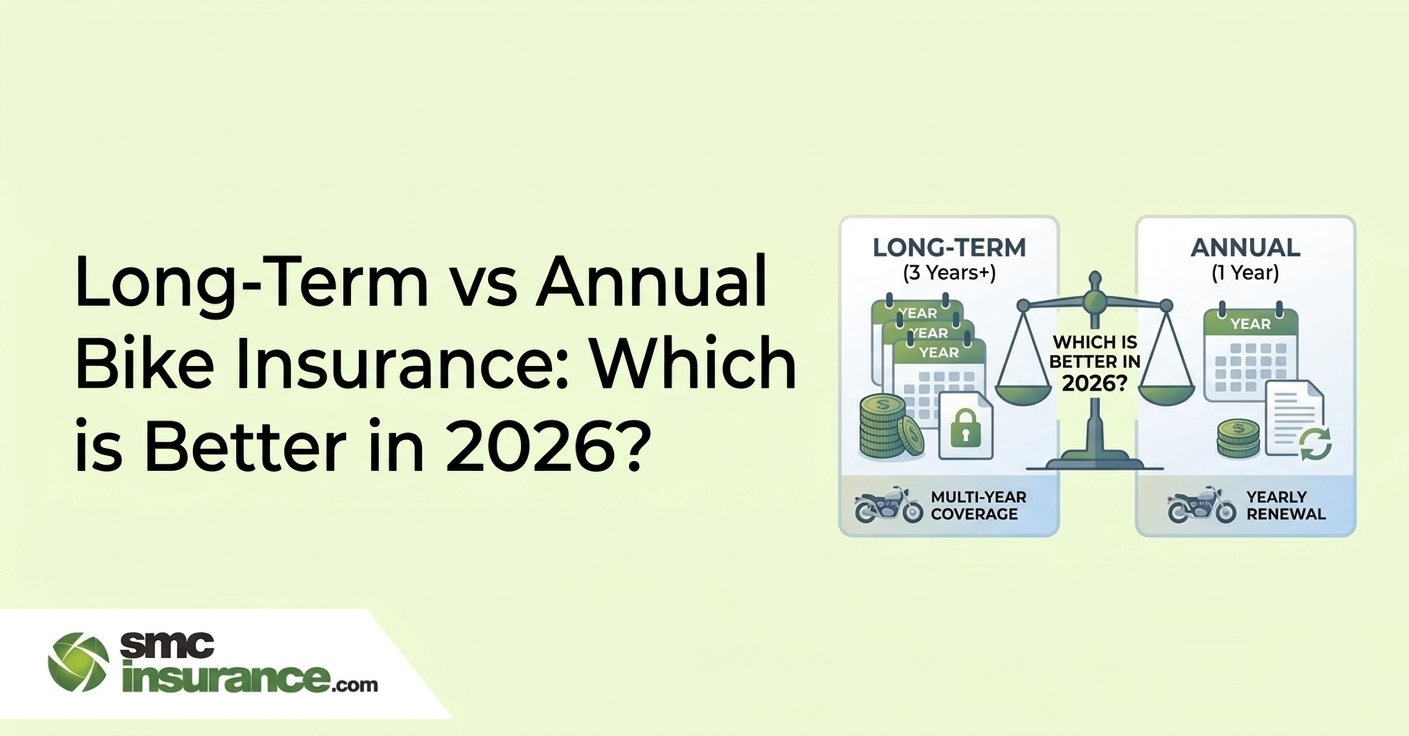
Long-term bike insurance offers fixed coverage for 2–5 years, reducing the risk of missed renewals and premium hikes. It suits new buyers and those who prefer convenience. Annual bike insurance renewal is usually cheaper upfront and offers flexibility to switch insurers or adjust coverage each year. The better option depends on whether you prioritise ease or cost control.
A rider in Bengaluru paid Rs. 1,800 for third-party bike insurance in 2021. Three years later, after missing a renewal once and buying a fresh policy, his cost jumped closer to Rs. 3,500. No accident. No claim. Just a break in continuity and updated rates.
That gap is more common than most people realise. Bike insurance often feels like a routine yearly chore, something you remember only when the reminder SMS arrives. Yet the way you structure it, yearly versus long-term, quietly shapes your cost, compliance and peace of mind.
Here’s what you’ll walk away with: a clear view of how long-term bike insurance compares with annual renewal, where each makes sense and how to choose without second-guessing later.
What Long-Term Bike Insurance Really Means For Indian Riders
Long-term bike insurance is not a new product, but many first-time buyers still misunderstand it.
As per IRDAI regulations implementing the Supreme Court’s 2018 directive, all new two-wheelers must be sold with a 5-year third-party insurance cover. Typically, bundled policies provide 1-year own-damage (OD) cover along with 5-year third-party cover, with OD renewable annually thereafter. IRDAI regulations allow only annual own-damage cover, even when paired with long-term third-party insurance. Long-term standalone OD policies are not permitted.
Think of it this way, instead of paying every year and tracking expiry dates, you lock in a multi-year cover upfront. That sounds convenient. But convenience alone is not the full story.
Cost Comparison: Long-Term Vs Renew Bike Insurance Annually
Here’s a comparison for a 110cc–125cc commuter bike:
|
Insurance Type |
3-Year Cost (Approx) |
Renewal Effort |
Premium Stability |
Best For |
|
Annual Renewal (OD + TP) |
Rs. 5,500–Rs. 7,500 |
High |
Variable |
Budget-conscious, flexible users |
|
Long-Term Bundled (3 Years) |
Rs. 6,500–Rs. 8,000 |
None |
Fixed upfront |
New buyers, forgetful renewers |
|
5-Year Third-Party Only |
Rs. 3,000–Rs. 4,000 |
None |
Fixed |
Legal compliance, basic coverage |
Note: Third-party premiums are fixed by IRDAI based on engine capacity, while own-damage premiums are determined by insurers. Prices vary by city, insurer and bike model. Always check live quotes before buying.
At first glance, annual renewal looks cheaper. And often, it is. But here’s what most people miss. If you skip even one renewal cycle or lose your No Claim Bonus, the cost advantage can disappear quickly.
Quick Tip: If a policy lapses, insurers may require a vehicle inspection before renewing own-damage cover, depending on the duration of the lapse. That delay can leave you uninsured during that period.
Flexibility Vs Commitment: The Trade-Off Riders Ignore
Annual policies offer freedom. You can switch insurers, tweak coverage, or drop add-ons each year. Long-term plans remove that flexibility. You commit once and stay locked in. So ask yourself this. Do you actively compare insurance every year? Or do you just renew whatever link lands in your inbox?
Most riders fall into the second category. That’s where long-term plans quietly work in your favour. They remove the risk of neglect.
The Real Risk Of Forgetting To Renew Bike Insurance
A real case from Uttarakhand shows how strictly insurers apply policy rules. In 2017, a motor insurance claim was rejected because the driver’s licence had expired about two weeks before the accident. The insurer denied liability on that basis, even though the vehicle was otherwise insured.
The dispute went to a consumer commission, where the claimant argued that the accident occurred within the legal 30-day grace period for licence renewal. The court eventually ordered the insurer to pay compensation, but only after prolonged litigation.
Stories like this show up often in local news coverage and consumer forums. A policy lapse is not a minor issue. It may lead to loss of accumulated No Claim Bonus if the policy is not renewed within the grace period. According to reports covered by financial news platforms, policy lapses remain one of the most common mistakes among two-wheeler owners in India. That’s where long-term bike insurance shines. It removes the human error factor.
Important Note: Riding without valid bike insurance is illegal under the Motor Vehicles Act. Riding without valid insurance can attract a fine of Rs. 2,000 and/or imprisonment up to 3 months for the first offence, with stricter penalties for repeat violations under the Motor Vehicles Act.
Buying Bike Insurance Online
When you buy bike insurance online, riders are able to handle insurance better. You can now compare multiple insurers, customize add-ons and pay instantly. No agent required. No paperwork delays.
How To Buy Or Renew Bike Insurance Online?
- Go to the SMC Insurance website.
- On the homepage, click the insurance category you want (for example: “Car Insurance” or “Bike Insurance”).
- You can then enter your registered vehicle number and click on “View Quotes". You also have the option to check quotes by giving the bike number.
- In case of vehicle insurance, the upcoming prompts will ask you for your vehicle details like brand, model, fuel type, variant and respective RTO.
- Once given, you can check the policy start and end date, confirm NCB details and view quotes from various insurers.
- On submission, SMC will display a list of available plans or quotes from partner insurers. You can view plan details like coverage, benefits, inclusions/exclusions, add-ons (if available), insured declared value (for vehicles), etc.
- Compare the available options and consider things like third-party vs comprehensive, add-ons (e.g. zero-depreciation, roadside assistance) as per your needs.
- Once you select the plan you want, click the button labeled “Buy Now”
- Fill out your personal details as required (owner name, address, contact, driving licence/RTO info or health info depending on policy). Ensure all details are accurate.
- Make the payment via the online gateway supported by the website. After payment confirmation you will receive your policy document or certificate electronically (through email or website account).
- Once everything is processed, your insurance policy becomes active. Keep a digital or printed copy of your policy/certificate for future reference.
Throughout the buying process, you have the option to contact the SMC Team for any kind of support you need. Missing a renewal step can lead to inspection requirements and higher premiums later. Completing this process before expiry keeps your record clean.
Where Long-Term Bike Insurance Makes Clear Sense
Long-term plans are not for everyone, but they fit certain situations very well. New bike buyers benefit the most. You comply with regulations and avoid early renewals. Busy professionals who forget due dates also gain.
Even riders in smaller towns, where offline renewal delays are common, often prefer locking coverage upfront. The irony is simple. People who want flexibility often don’t use it. And those who would benefit from stability end up renewing yearly out of habit.
When Renewing Every Year Still Works Better
Annual renewal still has its place. If you frequently upgrade your bike, a long-term commitment may not suit you. Riders who actively track insurance deals can save money by switching insurers yearly. Discounts and better add-ons often appear in competitive markets.
Also, if your usage changes, say you stop commuting daily, you may want to adjust coverage. Long-term plans limit that option.
Summing Up,
Bike insurance helps avoid small mistakes that turn into expensive ones. Long-term bike insurance reduces effort and removes the risk of missing renewals. It works best for new buyers and those who prefer a set-and-forget approach. Annual renewal offers flexibility and potential savings, but only if you stay disciplined every year.
The better choice depends less on price and more on your habits. Pick the one you will actually manage properly.
Disclaimer:The information provided on this platform is intended for general awareness and educational purposes. While every effort is made to ensure accuracy, some details may change with policy updates, regulatory revisions, or insurer-specific modifications. Readers should verify current terms and conditions directly with relevant insurers or through professional consultation before making any decision.
All views and analyses presented are based on publicly available data, internal research, and other sources considered reliable at the time of writing. These do not constitute professional advice, recommendations, or guarantees of any product’s performance. Readers are encouraged to assess the information independently and seek qualified guidance suited to their individual requirements. Customers are advised to review official sales brochures, policy documents, and disclosures before proceeding with any purchase or commitment.
FAQs
Not always. Annual policies can be cheaper upfront. However, long-term plans protect you from missed renewals and premium hikes, which can balance costs over time.
No, long-term third-party policies cannot be switched mid-term. However, own-damage cover can be renewed annually and may be switched between insurers.
You can renew bike insurance online by entering your vehicle details and paying the premium. If the policy has lapsed, the insurer may require a bike inspection before approval.
Yes, IRDAI-regulated insurers and licensed aggregators offer secure platforms. Always verify the website and avoid unknown payment links.
You lose your No Claim Bonus and risk legal penalties. Claims made during the lapse period will not be accepted.
It is optional. Older bikes often benefit more from annual plans since usage and coverage needs can change frequently.


