


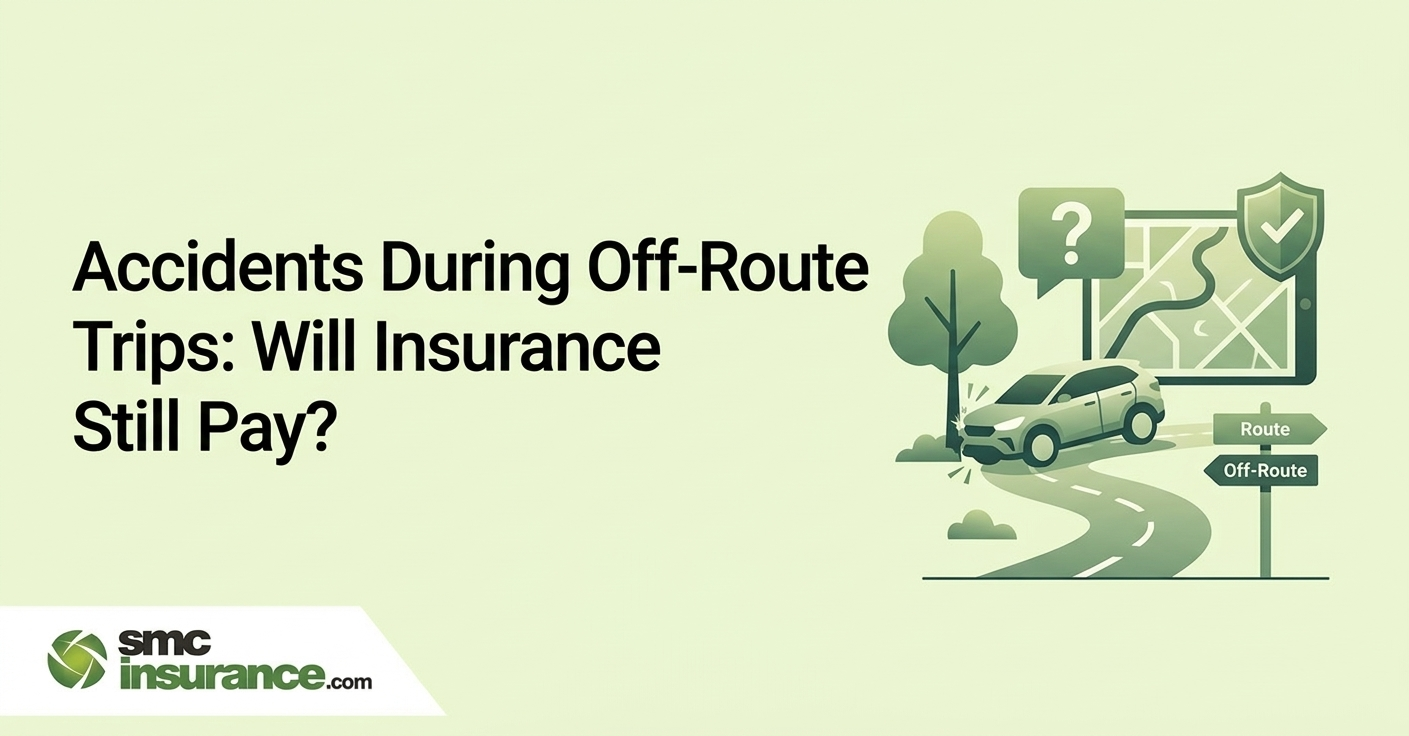
Yes, accident victims can still receive compensation even if a commercial vehicle was travelling outside its permitted route. The Supreme Court of India has clarified that insurance companies cannot deny compensation to victims solely because the vehicle violated its route permit.
In such cases, courts usually apply the “pay and recover” rule. This means the insurance company must first pay the compensation awarded to the victims. After that, the insurer can recover the amount from the vehicle owner if there was a violation of permit or policy conditions.
This approach ensures that accident victims are not left without financial support due to technical disputes between insurers and vehicle owners.
It was a regular afternoon. A private bus was on its usual route and the radio was playing loud. The RJ mentioned that there was heavy traffic on the route. The driver then decided to take a short diversion through another road to avoid traffic. Passengers on board did not think much of it. For them, it was just another ride home.
But a few kilometres later, the unexpected happened. The bus met with an accident!
Soon, questions began to surface. The injured passengers needed treatment. Families wanted answers and one issue stood out. The bus had been travelling outside its permitted route. That raised an important question:
Would The Insurance Company Still Pay Compensation?
Situations like this are more common than many people realise. Commercial vehicles such as buses, taxis and goods carriers operate under route permits. These permits define where the vehicle can run. In daily operations, drivers sometimes take diversions. It might be to avoid traffic, pick up passengers, or save time. Most of the time nothing goes wrong.
But if an accident happens during such a trip, things get complicated. Recently, the Supreme Court of India addressed this exact issue and clarified an important point. Even if a vehicle travels outside its permitted route, accident victims should not lose their right to compensation. Understanding how this works can help vehicle owners, drivers and accident victims know where they stand when such situations arise.
When a Vehicle Travels Off Its Approved Route?
Commercial vehicles in India operate under permits issued under the Motor Vehicles Act. These permits set rules such as:
- The region where the vehicle can operate
- The specific route it can follow
- The purpose of the vehicle (goods, passenger transport, etc.)
For example, a bus might have permission to operate between two towns. If it enters a nearby city outside that route, it technically breaks the permit conditions. In daily life, this happens more often than people assume. Drivers take diversions, accept extra passengers, or change routes to save time. Most trips go unnoticed. But if an accident happens during such a trip, the permit violation suddenly becomes an important issue in court.
And this is where disputes begin.
Why Do Insurance Companies Often Raise Objections?
Motor insurance works on a contract between the insurer and the vehicle owner. The policy includes conditions that must be followed. If the owner or driver breaks those conditions, insurers sometimes argue that the contract no longer applies.
In accident claims involving route violations, insurers have typically argued that:
- The vehicle was operating outside the authorised route
- This breached the permit conditions
- Because of this breach, the insurer should not be held liable
From a contractual point of view, this argument may appear logical. But courts have repeatedly examined a deeper question.
So, what happens to innocent victims in such cases?
If compensation depends entirely on the owner’s compliance with permit rules, many accident victims could be left with nothing. This concern led courts to take a more balanced view.
The Supreme Court’s Clear Position
The Supreme Court of India addressed this issue in a recent judgment. The Court ruled that insurance companies cannot refuse compensation simply because a vehicle deviated from its permitted route. The case involved a vehicle that had moved beyond the route mentioned in its permit when the accident took place. The insurer argued that this was a violation and therefore it should not be responsible for paying compensation.
The Court did not accept this reasoning.
Instead, it made an important observation. The main purpose of compulsory motor insurance is to protect accident victims and their families. Denying compensation on a technical ground like route deviation would defeat that purpose. The Court stated that the law should be interpreted in a way that favours accident victims rather than leaving them without support.
So what happens in such cases?
This is where the principle known as “pay and recover” comes into play.
The “Pay and Recover” Rule
Under this rule, the insurance company must first pay the compensation awarded to accident victims. Later, the insurer can recover that amount from the vehicle owner if there was a breach of policy conditions. In simple terms, the process works like this:
|
Step |
What Happens |
|
1 |
The court awards compensation to the accident victims |
|
2 |
The insurance company pays the amount |
|
3 |
If policy conditions were violated, the insurer can recover the amount from the vehicle owner |
This approach ensures that victims receive compensation without delay. At the same time, it also holds vehicle owners responsible if they break permit rules or insurance conditions. Courts have repeatedly supported this balance because it protects both legal principles and social justice.
Why Do Courts Give Priority to Victims?
Motor accident cases often involve families that suddenly lose a breadwinner. Medical costs, lost income and long legal battles can create enormous strain. If insurers were allowed to deny claims based purely on permit violations, victims could end up waiting years to recover compensation from vehicle owners who may not even have the financial capacity to pay.
Courts have therefore emphasised the broader goal of motor insurance. The idea is simple. Road accident victims should not suffer because of disputes between insurers and vehicle owners. This thinking forms the backbone of the “pay and recover” approach used by courts across India.
A Real Case That Clarified the Law
A recent Supreme Court case brought clarity to this issue. The case involved a bus owned by K. Nagendra and insured with New India Assurance Co. Ltd. The bus had permission to run on a specific route. But on the day of the accident, it entered Channapatna town in Karnataka, which was outside the approved route. During this trip, the bus was involved in an accident that led to a person’s death. The victim’s family filed a compensation claim before the Motor Accident Claims Tribunal.
The Karnataka High Court calculated the compensation at Rs. 31.84 lakh for the victim’s family. However, the insurer argued that it should not be responsible for paying the amount because the bus had violated its route permit. The court did not accept this argument. Instead, it applied the “pay and recover” principle. The insurer was directed to pay the compensation to the victims first and later recover the amount from the vehicle owner.
The case eventually reached the Supreme Court, which upheld the same approach. The Court clarified that a route permit violation may affect the contract between the insurer and the vehicle owner, but it cannot be used to deny compensation to accident victims.
What Counts as a Route Permit Violation?
Permit violations can occur in different ways. Some common examples include:
- A bus entering a city outside its approved route
- A taxi operating in a district where it has no permit
- A goods vehicle transporting passengers
- A commercial vehicle running beyond the permitted geographic area
Each case depends on the specific facts.
Courts examine the permit, the circumstances of the accident and the insurance policy terms. But one point remains clear: even if a violation exists, victims still retain their right to compensation.
Does This Mean Vehicle Owners Can Ignore Permit Rules?
Not at all. The Supreme Court has made it clear that operating outside the permitted route is still a breach of policy conditions. This means the vehicle owner may ultimately bear financial responsibility. Because under the “pay and recover” rule, the insurer can recover the amount from the owner after paying the victims.
So the legal consequences for owners remain serious. Owners must still ensure that:
- Vehicles operate within authorised routes
- Drivers follow permit conditions
- All insurance requirements are maintained
Failure to do so can lead to legal and financial trouble later.
How the Motor Vehicles Act Protects Victims?
The Motor Vehicles Act introduced compulsory third-party insurance for one primary reason. Road accident victims often have no control over what happened. They are simply passengers, pedestrians, or occupants of another vehicle. Without mandatory insurance, victims would have to rely entirely on the vehicle owner’s ability to pay compensation. That would leave many families without support. Compulsory insurance ensures that:
- Every registered vehicle carries basic financial protection
- Victims can claim compensation through legal channels
- Insurance companies play a key role in settling claims
This system works best when technical arguments do not override the larger goal of victim protection. That is why courts consistently lean toward protecting the rights of claimants.
What Accident Victims Should Know
If an accident happens and the vehicle involved was not on its permitted route, victims should not assume that compensation will be denied. Courts have repeatedly clarified that such violations cannot be used to block legitimate claims.
Victims or their families can still file claims before the Motor Accident Claims Tribunal (MACT). The tribunal will examine the case and determine the compensation amount. And in many cases, the insurer will still be directed to pay the compensation first.
Key Takeaways From Recent Judgments
Here are a few important lessons that emerge from recent court rulings:
- Route deviations do not automatically cancel insurance liability.
- Insurance companies cannot refuse compensation solely because the vehicle moved outside its permitted route.
- Victims remain protected under the law.
- Courts prioritise the rights of accident victims and their families.
- The “pay and recover” principle applies in many cases.
- Insurers pay the compensation first and may recover it from the vehicle owner later.
- Vehicle owners must still follow permit conditions.
- Violations may lead to financial recovery actions by insurers.
These principles help maintain fairness within the system.
What This Means for the Future of Motor Insurance?
Court rulings like these shape how motor accident claims are handled across the country. They reduce uncertainty for victims and provide clarity to insurers and vehicle owners. Over time, such decisions strengthen the larger purpose of motor insurance, which is to ensure that road accident victims are not left without financial support.
The insurance system works best when claims are settled promptly and fairly. And legal clarity plays a major role in achieving that.
How Insurance Platforms Like SMC Insurance Help
Understanding motor insurance rules can be confusing for many vehicle owners. Policy conditions, permit requirements and claim procedures often involve complex details. This is where platforms like SMC Insurance help simplify the process. SMC Insurance partners with several leading insurers and helps customers:
- Compare motor insurance policies
- Understand coverage terms clearly
- Choose plans that match their needs
- Receive support during claim situations
Access to the right guidance can make a huge difference, especially when dealing with accident claims and legal procedures. Having the right policy and proper coverage ensures that both vehicle owners and third-party victims remain financially protected.
Must-Read Guides From SMC
- Factors Affecting Your Bike Insurance Premium
- Types of Bike Insurance
- KYC Documents Required to Buy Bike Insurance
- Best Bike Insurance Company in India
- PA Cover in Bike Insurance
- Check Bike/Car PUC Status Online
- Check Bike/Car RTO Details
- What Happens If Bike Insurance Expires?
- How To Renew Your Expired Bike Insurance Online?
- Does a Modified Exhaust Void Car or Bike Insurance in India
- Does Car Insurance Cover Engine Damage Due to Flood
Summing Up,
Accidents are unpredictable. When they occur, the focus should remain on helping victims recover and supporting families facing sudden loss. Courts in India have recognised this reality. Even if a vehicle travels outside its permitted route, accident victims should not lose their right to compensation.
Insurance companies may still have the right to recover the amount from vehicle owners who violate permit conditions. But the victims must not be left waiting for justice. That principle now stands firmly supported by the Supreme Court.
Disclaimer:The information provided on this platform is intended for general awareness and educational purposes. While every effort is made to ensure accuracy, some details may change with policy updates, regulatory revisions, or insurer-specific modifications. Readers should verify current terms and conditions directly with relevant insurers or through professional consultation before making any decision.
All views and analyses presented are based on publicly available data, internal research, and other sources considered reliable at the time of writing. These do not constitute professional advice, recommendations, or guarantees of any product’s performance. Readers are encouraged to assess the information independently and seek qualified guidance suited to their individual requirements. Customers are advised to review official sales brochures, policy documents, and disclosures before proceeding with any purchase or commitment.
FAQs
Yes, courts have clarified that accident victims cannot be denied compensation simply because the vehicle was operating outside its approved route.
Insurers may argue that travelling outside the permitted route violates the policy conditions and the vehicle’s permit rules.
The Supreme Court ruled that route deviations cannot be used as a reason to deny compensation to accident victims.
Under this rule, the insurance company first pays the compensation to the victims. After that, it can recover the amount from the vehicle owner if policy conditions were violated.
Yes, victims or their families can still approach the Motor Accident Claims Tribunal (MACT) and seek compensation under the law.


