


%20Cover%20Bike%20Insurance.png)







SMC Insurance
Welcome to SMC.
How may I assist you?
Enter any vehicle registration number to get complete RTO details in seconds.
Type your vehicle number in the search box above
Live data fetched from Parivahan/VAHAN database
Owner info, insurance status, RC validity and more
Name, address & ownership
Date, expiry & RTO office
Policy status & expiry
Make, model, fuel type
Registration certificate dates
Vehicle Details
Important Dates
Other Information
Every vehicle on Indian roads — whether a two-wheeler registered in a small district town or a commercial truck travelling interstate — carries a registration number issued by a Regional Transport Office (RTO). The RTO is far more than a registration counter; it is the primary government authority that connects vehicle ownership, road safety, taxation, and legal compliance for over 30 crore registered vehicles across India.
Yet for most vehicle owners, the RTO remains either an intimidating bureaucratic office or simply the place you visit once to get a registration certificate and never think about it again - until a challan arrives, the RC expires, insurance renewal is blocked, or you need to transfer a vehicle after a sale.
This guide covers everything you need to know about RTOs in India in 2026: what they do, which services you can access online, how to check your vehicle details, what forms you need, updated fees and fines, and how RTO compliance directly affects your motor insurance.
RTO stands for Regional Transport Office. It is a government body established under the Motor Vehicles Act, 1988, and is responsible for vehicle registration, driving licences, road tax collection, and traffic rule enforcement. Regional Transport Authorities (RTAs) exist as regulatory bodies under the Motor Vehicles Act, but offices in Tamil Nadu are commonly referred to as RTOs (Regional Transport Offices)
The term 'Regional' reflects how the office functions: each state in India has its own network of RTOs spread across districts, overseen by a State Transport Commissioner who reports to the State Transport Department. The Ministry of Road Transport and Highways (MoRTH), Government of India, sets the overarching policy and rules through the Central Motor Vehicles Rules, 1989.
Note on naming variants: In Tamil Nadu, the authority is called the Regional Transport Authority (RTA). In some northeastern states, district-level offices are called District Transport Offices (DTOs). Regardless of the name, the statutory functions under the Motor Vehicles Act are identical.
What does the RTO do?
The RTO performs seven core functions: vehicle registration, driving licence issuance, road tax collection, pollution certificate (PUC) oversight, vehicle fitness inspection, transfer of ownership, and traffic challan enforcement. It derives its authority from the Motor Vehicles Act, 1988, and the Central Motor Vehicles Rules, 1989.
How do RTO vehicle registration codes work in India?
Every Indian vehicle registration number begins with a two-letter state code followed by a one or two-digit district number. For example, TN-38-AX-1234 means: TN = Tamil Nadu, 38 = Coimbatore district, AX = series, 1234 = unique number. Each state has a unique two-letter code assigned by MoRTH.
Below is the complete list of state and union territory RTO codes in India:
|
State / UT |
RTO Code |
|
Andhra Pradesh |
AP |
|
Arunachal Pradesh |
AR |
|
Assam |
AS |
|
Bihar |
BR |
|
Chhattisgarh |
CG |
|
Goa |
GA |
|
Gujarat |
GJ |
|
Haryana |
HR |
|
Himachal Pradesh |
HP |
|
Jharkhand |
JH |
|
Karnataka |
KA |
|
Kerala |
KL |
|
Madhya Pradesh |
MP |
|
Maharashtra |
MH |
|
Manipur |
MN |
|
Meghalaya |
ML |
|
Mizoram |
MZ |
|
Nagaland |
NL |
|
Odisha |
OD |
|
Punjab |
PB |
|
Rajasthan |
RJ |
|
Sikkim |
SK |
|
Tamil Nadu |
TN |
|
Telangana |
TG |
|
Tripura |
TR |
|
Uttar Pradesh |
UP |
|
Uttarakhand |
UK |
|
West Bengal |
WB |
|
Delhi (NCT) |
DL |
|
Chandigarh (UT) |
CH |
|
Jammu & Kashmir |
JK |
|
Ladakh |
LA |
|
Puducherry |
PY |
|
Andaman & Nicobar |
AN |
|
Lakshadweep |
LD |
|
Dadra, Nagar Haveli & Daman, Diu |
DN |
Pro tip: If you are buying a used vehicle from another state, verify that the RTO code in the registration number matches the seller's claimed location. Mismatched codes may indicate an undisclosed interstate transfer without proper NOC — which can complicate insurance claims.
How can I check vehicle owner details online in India?
You can check vehicle registration details, owner name, insurance status, and RC validity on the official Parivahan portal (parivahan.gov.in) under the 'Know Your Vehicle Details' option. The service is free and available 24/7. You will need to enter the vehicle registration number and verify via OTP. Alternatively, check via the SMC Insurance RTO Vehicle Details tool instantly without logging in.
The Ministry of Road Transport and Highways launched the Parivahan Sewa portal and the VAHAN (Vehicle Registration) system to digitise all vehicle-related records. Every registered vehicle's data — including insurance, PUC, and fitness certificate status — is available on this portal in real time.
Step-by-step guide to check vehicle details on Parivahan:
Here is what the Parivahan portal shows:
|
Data Field |
What It Tells You |
|
Owner Name |
Full name as registered with the RTO |
|
Registration Date |
Date of original registration |
|
RC Validity |
Date until which the RC is currently valid |
|
Vehicle Class |
Private / Commercial / Transport |
|
Fuel Type |
Petrol / Diesel / CNG / Electric / Hybrid |
|
Insurance Company |
Name of the insurer on the current policy |
|
Insurance Policy Expiry |
Date when current insurance expires |
|
PUC Status |
Valid / Expired, with certificate number |
|
Fitness Certificate |
For commercial vehicles — validity date |
|
Chassis & Engine Number |
Partially masked for security |
|
Hypothecation (Loan) |
Whether the vehicle is under a bank's charge |
Insurance Check Alert: If the Parivahan portal shows your insurance as expired — or shows the wrong insurer — contact SMC Insurance immediately. Driving without valid insurance violates Section 146 of the Motor Vehicles Act, 1988, attracting a fine of Rs. 2,000 for a first offence and Rs. 4,000 for repeat.
If you’re already exploring insurance or comparing plans, it often feels easier to check your vehicle details right where you’re managing everything else. That’s why we’ve made it simple to look up key RTO information through the SMC Insurance platform itself. And the process hardly takes a minute.
Here is the link - https://www.smcinsurance.com/rto/vehicle-owner-details
You don’t need to dig through multiple portals or switch between tabs. Just enter your number, hit search, and the details appear instantly. Here’s how you can do it:
If you prefer doing everything on your phone, the SMC mobile app Android version/IOS version makes it even smoother. You can check vehicle details, review your policy, compare plans, and manage your insurance journey from one place. And you can do it anytime, whether you’re at home or standing next to the vehicle you’re verifying.
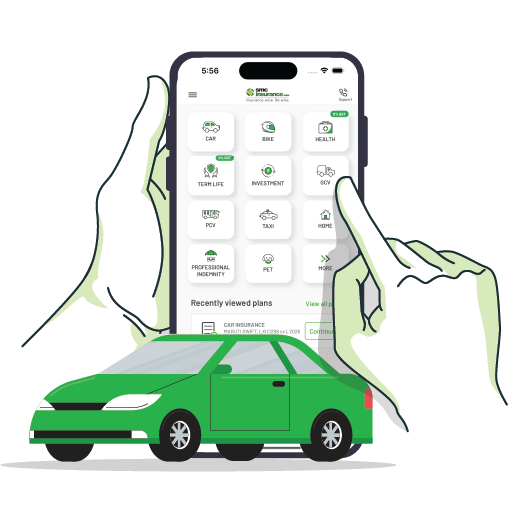
Want more smart ways to simplify your Vehicle Insurance journey?
The SMC Insurance app gives you expert guidance on everything INSURANCE


What is the difference between temporary and permanent RC?
A temporary RC is issued by the vehicle dealer at the time of purchase and is valid for one month (extendable once more). A permanent RC is issued by the RTO and is valid for 15 years for private vehicles. The vehicle owner must apply for permanent registration within 7 days of taking delivery of the vehicle.
|
Parameter |
Temporary RC |
Permanent RC |
|
Issued by |
Vehicle dealer (at time of purchase) |
RTO of your state |
|
Legal basis |
Section 43, MV Act 1988 |
Section 39, MV Act 1988 |
|
Valid for |
1 month (extendable once, 1 more month) |
15 years for private vehicles |
|
Maximum extension |
2 months total — cannot be extended further |
Renewable after expiry |
|
Interstate travel |
Permitted only for relocation to another state |
Freely permitted |
|
Apply deadline |
Auto-issued at purchase |
Within 7 days of vehicle delivery |
|
Insurance implication |
Policy valid but RC shows interim dealer number |
All claims require valid permanent RC number |
When your permanent RC approaches expiry, apply for renewal before the expiry date. The process requires Form 25 (Application for RC Renewal), a vehicle inspection at the RTO for roadworthiness, a valid PUC certificate, a valid insurance policy, and payment of the renewal fee (Rs. 50–Rs. 1,500 depending on state and vehicle type).
Important: If your vehicle is over 15 years old and fails the fitness inspection, the RTO may not renew the RC. This is directly tied to India's Vehicle Scrappage Policy, under which vehicles older than 15 years (commercial) or 20 years (private) that fail fitness tests are classified as end-of-life vehicles.
If your original RC is lost, stolen, or damaged, apply for a duplicate at your RTO using Form 26. For theft cases, an FIR and a notarised affidavit are required. Fees range from Rs. 25 to Rs. 1,500 depending on the state.
Which RTO services are available online in India?
Most major RTO services are now available through the Parivahan Sewa portal (parivahan.gov.in). These include vehicle registration check, RC transfer, driving licence application and renewal, e-challan payment, NOC application, road tax payment, and fitness certificate application. Appointments for in-person tests can also be booked online.
|
Service |
Online Access Path |
|
Vehicle Owner & RC Details Check |
parivahan.gov.in → Informational Services → Know Your Vehicle |
|
Driving Licence Status Check |
parivahan.gov.in → Informational Services → Know Your Licence Details |
|
Apply for Learner's Licence (LL) |
sarathi.parivahan.gov.in → Driving Licence → Apply for LL (Form 3) |
|
Book DL Test Slot |
sarathi.parivahan.gov.in → Driving Licence → Slot Booking |
|
DL Renewal Application |
sarathi.parivahan.gov.in → Driving Licence → DL Renewal |
|
RC Renewal Application |
parivahan.gov.in → Vehicle Services → RC Renewal |
|
Transfer of Ownership (RC Transfer) |
parivahan.gov.in → Online Services → Transfer of Ownership |
|
Hypothecation Addition / Removal |
parivahan.gov.in → Vehicle Services → Hypothecation |
|
NOC Application (Interstate Transfer) |
parivahan.gov.in → Online Services → Application for NOC |
|
e-Challan Status & Payment |
echallan.parivahan.gov.in |
|
PUC Certificate Verification |
parivahan.gov.in → Informational Services → Vehicle Details |
|
Road Tax Payment |
State transport department portals (state-wise) |
|
Fancy / HSRP Number Plate Booking |
fancy.parivahan.gov.in |
|
Vehicle Fitness Certificate |
parivahan.gov.in → Vehicle Services → Fitness Application |
|
FASTag Recharge & Balance Check |
fastag.ihmcl.com / respective bank portals / UPI apps |
|
Digital RC & DL (legally valid) |
digilocker.gov.in / mParivahan app |
Aadhaar-based verification: Many Parivahan services now require Aadhaar-linked mobile OTP for identity confirmation. Keep your Aadhaar-linked mobile number ready before starting any online RTO process. Digital documents on DigiLocker and mParivahan are legally valid under the IT Act, 2000 and must be accepted by traffic police pan-India.
How much does vehicle registration cost at the RTO?
The central vehicle registration fee is Rs. 600 for all vehicle categories, irrespective of value. Hypothecation (loan) charge is Rs. 1,500. Road tax is levied separately by each state, ranging from 3% to 18% of the vehicle's ex-showroom price. FASTag (Rs. 500–Rs. 600) is mandatory for all new vehicles from registration.
|
Service / Purpose |
Indicative Fee (2026) |
|
New Vehicle Registration Fee (all categories) |
Rs. 600 flat |
|
Hypothecation / HP Endorsement (if loan) |
Rs. 1,500 |
|
FASTag (mandatory for all vehicles) |
Rs. 500 – Rs. 600 (incl. security deposit) |
|
HSRP — Two-Wheeler |
Rs. 250 – Rs. 350 |
|
HSRP — Four-Wheeler |
Rs. 350 – Rs. 500 |
|
Temporary Registration |
Rs. 1,500 – Rs. 2,500 |
|
RC Renewal (after 15 years) |
Rs. 50 – Rs. 1,500 (state-variable) |
|
Duplicate RC (with FIR & affidavit) |
Rs. 25 – Rs. 1,500 |
|
Transfer of Ownership Fee |
Rs. 300 – Rs. 3,000 |
|
NOC Certificate |
Rs. 100 – Rs. 500 |
|
Learner's Licence |
Rs. 150 per vehicle class |
|
Learner's Licence Test Fee |
Rs. 50 |
|
Permanent Driving Licence |
Rs. 200 per vehicle class |
|
Driving Test (competency) |
Rs. 300 |
|
DL Renewal |
Rs. 200 – Rs. 500 |
|
Late DL Renewal Penalty |
Rs. 100/month (max Rs. 1,000) |
|
International Driving Permit (IDP) |
Rs. 500 (1-year validity) |
Disclaimer: Fees are indicative and subject to change with Central Motor Vehicles Rules amendments. State governments add their own charges on top of central fees. Always verify the exact fee on parivahan.gov.in or your state's RTO website before visiting.
Road tax is the largest RTO charge at the time of vehicle purchase. Rates are applied on ex-showroom prices in most states. Exceptions: Chandigarh, Jharkhand, and Gujarat calculate road tax on the invoice price before GST.
|
State |
Private Car (up to Rs. 10L) |
Private Car (Rs. 10L–Rs. 20L) |
Two-Wheeler |
|
Delhi |
4% – 12.5% |
12.5% |
4% – 8% |
|
Maharashtra |
11% – 13% |
13% |
10% – 12% |
|
Karnataka |
13% – 18% |
17% – 18% |
12% – 18% |
|
Tamil Nadu |
10% – 12% |
12% |
8% – 10% |
|
Gujarat |
6% – 8% |
8% |
6% |
|
Rajasthan |
6% – 8% |
8% |
5% – 6% |
|
Uttar Pradesh |
8% – 10% |
10% |
6% – 8% |
|
Himachal Pradesh |
3% – 4% |
4% |
2% – 3% |
Note: Karnataka is among the states with the highest road tax rates, while states like Himachal Pradesh have comparatively lower rates. EV buyers get road tax exemptions in most states — check your state's current EV policy before purchase.
The BH Series was launched in 2021 for central/state government employees and private sector employees in organisations with offices in 4+ states. BH vehicles carry a nationwide registration — no re-registration required when shifting states. Road tax is paid every 2 years (not one-time like state registration).
|
Vehicle Price (Ex-showroom) |
BH Road Tax Rate |
|
Up to Rs. 10 Lakh |
8% |
|
Rs. 10 Lakh – Rs. 20 Lakh |
10% |
|
Above Rs. 20 Lakh |
12% |
|
Electric Vehicles (all slabs) |
6% — reduced rate for EVs |
What form is required for vehicle registration in India?
Form 20 is the primary application for new vehicle registration. Form 21 (Sales Certificate) is issued by the dealer, and Form 22 (Road Worthiness Certificate) by the manufacturer. For driving licences, Form 3 is used for the Learner's Licence application. All forms can be downloaded from parivahan.gov.in under the 'Downloads' section.
|
Form No. |
Name |
Purpose / When to Use |
|
Form 3 |
Learner's Licence Application |
First step toward getting a driving licence |
|
Form 20 |
Registration Application |
New vehicle registration — filled by owner/buyer |
|
Form 21 |
Sales Certificate |
Issued by dealer — proof of vehicle sale |
|
Form 22 |
Road Worthiness Certificate |
Issued by manufacturer/dealer at time of sale |
|
Form 23B |
Temporary RC |
Temporary registration certificate issued by dealer |
|
Form 25 |
RC Renewal Application |
Applied when RC validity nears expiry (15 years) |
|
Form 26 |
Duplicate RC Application |
Applied when original RC is lost or damaged |
|
Form 29 |
Notice of Transfer |
Filed by seller to notify RTO of sale — within 14 days |
|
Form 30 |
Application for Transfer |
Filed by buyer to register name change on RC — within 14 days |
|
Form 35 |
Hypothecation Cancellation |
Filed when vehicle loan is fully repaid |
|
Form 38A |
Inspection Report |
RTO vehicle inspection — needed for RC renewal and fitness |
|
Form 51 |
Certificate of Insurance |
Insurance certificate submitted to RTO at registration |
|
Form 54 |
Accident Information Report |
Filed with RTO in case of accident involving third-party claim |
Download forms: All official RTO forms are available at morth.nic.in or parivahan.gov.in under the 'Downloads' section. Use only official government sources. Third-party websites may serve outdated form versions that can cause application rejection.
Is motor insurance checked by the RTO?
Yes. The Parivahan VAHAN system integrates real-time insurance data through the Insurance Information Bureau of India (IIB). Traffic police and RTO officials can verify a vehicle's insurance status instantly using the registration number. Driving without valid third-party insurance is a punishable offence under Section 146 of the Motor Vehicles Act, 1988.
Under Section 146 of the Motor Vehicles Act, 1988, no person shall use a motor vehicle in a public place without a valid third-party insurance policy. This is non-negotiable. The fine for driving without it is Rs. 2,000 for a first offence and Rs. 4,000 for a subsequent offence under Section 196 of the MV Act. The vehicle can be impounded and the driving licence can be suspended.
When you purchase or renew a motor insurance policy, your insurer is required by IRDAI regulations to report the policy details to the Insurance Information Bureau of India (IIB). The IIB feeds this data into the VAHAN database within 48–72 hours of policy issuance. This makes fake insurance certificates easy to detect. From April 2026, under IRDAI's Ind AS reporting framework, insurers operate under even tighter data accuracy obligations — meaning the VAHAN database reflects policy status more reliably than ever.
If you renew your policy but your insurer delays reporting to IIB, you may face a challan even though your insurance is valid. In such cases, your policy document and insurer's confirmation are sufficient to contest the challan at the RTO.
Insurance and RC Transfer — What Changes When You Sell a Vehicle
Since September 2018, following a Supreme Court directive and IRDAI mandate, all new vehicles must be registered with a mandatory long-term insurance package:
When you register a new vehicle, the dealer arranges the insurance as part of the process. However, you are not obligated to buy from the dealer — you can choose your own insurer as long as the policy is in place before registration. Comparing plans from 30+ insurers on SMC Insurance before registration can save significantly on the OD premium.
An expired RC does not automatically invalidate your insurance policy. However, it complicates claims. Many insurers include a condition that the vehicle must be in a 'roadworthy and legally compliant condition'. An expired RC is a legal non-compliance, and some insurers use this to dispute or reduce claim settlements. Always renew your RC before it expires.
Is FASTag mandatory for all vehicles in India?
Yes. FASTag is mandatory for all four-wheelers and above under NHAI's One Nation One FASTag initiative. Vehicles without a valid, active FASTag are charged double the toll at National Highway barriers. From November 2025, enforcement tightened further — vehicles without valid FASTags are charged double toll; additional enforcement measures such as penalties may apply depending on implementation.
FASTag is an RFID-based prepaid tag linked to your vehicle's RC. When you pass a FASTag-enabled toll plaza, the toll amount is automatically deducted from your linked bank account or wallet — no stopping, no cash, no queue.
Key FASTag Facts (2026)
|
Parameter |
Details |
|
Mandatory for |
All 4-wheelers and above — private and commercial |
|
Tag cost |
Rs. 500 – Rs. 600 (includes Rs. 200 security deposit + minimum balance) |
|
Issuing banks |
29 NPCI-approved banks (SBI, HDFC, ICICI, Paytm Payments Bank, etc.) |
|
Tag validity |
5 years from issue (rechargeable prepaid RFID) |
|
Penalty — no FASTag |
Double toll charge at barrier + automatic e-challan (from Nov 2025) |
|
KYC requirement |
Aadhaar/PAN-based KYC mandatory |
|
Coverage |
Operational at 900+ National Highway toll plazas pan-India |
Also Read:
What is a PUC certificate and who can issue it?
A PUC (Pollution Under Control) certificate confirms that your vehicle's emission levels meet standards under the Central Motor Vehicles Rules. Only authorised PUC testing centres — approved by the state government — can issue this certificate. The validity is 6 months for most vehicles and 1 year for new BS6 vehicles. Fines for PUC violations can go up to Rs. 10,000 under stricter enforcement provisions, though actual penalties may vary by state and enforcement
|
Vehicle Category |
First PUC Validity |
Subsequent Renewals |
|
All new vehicles (BS6) |
1 year from registration |
6 months per renewal |
|
BS4 and older vehicles |
6 months |
6 months per renewal |
|
High-emission flagged vehicles |
After re-test |
3 months (monitored closely) |
|
Electric Vehicles (EVs) |
Exempt — no PUC required |
— |
When you purchase a vehicle, your PUC certificate is valid only for a limited period and must be renewed on time. Keeping track of its expiry date helps you stay compliant with pollution norms and avoid penalties. SMC Insurance provides an easy online facility to check the current status of your PUC certificate without any login or verification.
Step 1:Visit SMC’s PUC status page here: Check your PUC validity online
Step 2:Enter your car’s registration number as mentioned on the RC.
Step 3:Click on the search option to proceed.
Step 4:The system will display your PUC details, including:
This helps you confirm whether your PUC certificate is still valid or due for renewal.
Also Read:
What are the traffic fines in India in 2026?
Traffic fines in India are governed by the Motor Vehicles (Amendment) Act, 2019. Key fines: no licence Rs. 5,000 (S.181), no insurance Rs. 2,000/Rs. 4,000 (S.196), no PUC Rs. 10,000 (S.190(2)), drunk driving Rs. 10,000–Rs. 15,000 (S.185), no helmet Rs. 1,000 + 3-month DL suspension (S.194D), mobile phone while driving Rs. 5,000/Rs. 10,000 (S.184), juvenile driving Rs. 25,000 + 3 years imprisonment (S.199A).
|
Offence |
Section |
Fine (Rs. ) |
Additional Penalty |
|
Driving without licence |
S. 181 |
5,000 |
Imprisonment up to 3 months |
|
Driving without valid insurance |
S. 196 |
2,000 (1st) / 4,000 (repeat) |
Vehicle impound; licence suspension |
|
Driving without valid PUC |
S. 190(2) |
10,000 |
Vehicle may be impounded |
|
Drunk driving (1st offence) |
S. 185 |
10,000 |
Up to 6 months imprisonment |
|
Drunk driving (repeat) |
S. 185 |
15,000 |
Up to 2 years imprisonment |
|
Overspeeding — LMV |
S. 183 |
1,000 – 2,000 |
— |
|
Overspeeding — HMV |
S. 183 |
2,000 – 4,000 |
DL suspension possible |
|
No helmet (rider & pillion) |
S. 194D |
1,000 |
3-month DL suspension |
|
Non-BIS helmet (from Jan 2026) |
S. 194D |
1,000 |
3-month DL suspension |
|
No seatbelt |
S. 194B |
1,000 |
— |
|
Mobile phone while driving (1st) |
S. 184 |
5,000 |
DL suspension |
|
Mobile phone while driving (repeat) |
S. 184 |
10,000 |
DL suspension |
|
Red light jumping |
S. 177 |
1,000 / 2,000 (repeat) |
— |
|
Not yielding to emergency vehicle |
S. 194E |
10,000 |
— |
|
Juvenile driving (under 18) |
S. 199A |
25,000 |
3 years imprisonment; RC cancelled; guardian liable |
|
Wrong-side driving |
S. 184 |
5,000 |
DL suspension possible |
2026 enforcement update: CCTV-based automatic e-challan systems are now active in 60+ cities. Unpaid challans may block certain RTO services like RC renewal in some states; linkage with insurance issuance is not uniformly mandated nationwide. Check your challan status regularly at echallan.parivahan.gov.in.
India has over 1,400 RTO and sub-RTO offices spread across 28 states and 8 union territories. Each district typically has at least one RTO. In large cities like Mumbai, Delhi, and Bengaluru, multiple regional offices serve different parts of the city.
States with the largest RTO networks: Uttar Pradesh (75+ RTOs), Karnataka (67+ RTOs), Maharashtra (50+ RTOs), Rajasthan (50+ RTOs), Tamil Nadu (37 RTOs).
To find your nearest RTO address, contact number, and jurisdiction:
Disclaimer:The information provided on this platform is intended for general awareness and educational purposes. While every effort is made to ensure accuracy, some details may change with policy updates, regulatory revisions, or insurer-specific modifications. Readers should verify current terms and conditions directly with relevant insurers or through professional consultation before making any decision.
All views and analyses presented are based on publicly available data, internal research, and other sources considered reliable at the time of writing. These do not constitute professional advice, recommendations, or guarantees of any product’s performance. Readers are encouraged to assess the information independently and seek qualified guidance suited to their individual requirements. Customers are advised to review official sales brochures, policy documents, and disclosures before proceeding with any purchase or commitment.
RTO stands for Regional Transport Office. In Tamil Nadu, the equivalent body is called the Regional Transport Authority (RTA). Both operate under the Motor Vehicles Act, 1988, and perform the same functions.
Visit parivahan.gov.in and go to Informational Services → Know Your Vehicle Details. Enter your registration number after verifying your mobile via OTP. You can also check instantly on the SMC Insurance RTO Vehicle Owner Details page without a login.
For private vehicles (cars, two-wheelers), the RC is valid for 15 years from the date of registration. After 15 years, apply for renewal at your RTO using Form 25, along with a valid insurance certificate and PUC certificate. Commercial vehicles' RC validity is tied to their Fitness Certificate.
Submit Form 25 at your RTO along with your insurance certificate, PUC certificate, address proof, and RC renewal fee. A physical vehicle inspection at the RTO is mandatory. If the vehicle passes the roadworthiness check, a renewed RC is issued, typically valid for 5 more years.
Yes. Visit echallan.parivahan.gov.in and enter your vehicle registration number or DL number to view pending challans. You can pay online via UPI, debit card, or net banking. See our Challan Status Check page for a step-by-step guide.
The seller submits Form 29 (Notice of Transfer), a copy of the RC, insurance certificate, PUC certificate, and ID proof. The buyer submits Form 30 (Transfer Application), address proof, identity proof, and the applicable transfer fee. Both must be filed at the RTO within 14 days of the sale date.
Yes. The VAHAN database receives real-time insurance updates from the Insurance Information Bureau of India (IIB). Traffic police at check posts can verify your insurance validity instantly by entering your registration number — no physical document needed.
Under Section 196 of the Motor Vehicles Act, 1988, the fine is Rs. 2,000 for a first offence and Rs. 4,000 for any repeat offence. The vehicle can be impounded and the owner may face imprisonment of up to three months.
Go to sarathi.parivahan.gov.in → Driving Licence → Apply for Learner's Licence. Fill Form 3, upload your Aadhaar and photo, pay the fee (Rs. 150), and take the computerised LL test (15–20 MCQs, 60% pass mark, available in Hindi, English, and regional languages). If you pass, the LL is generated instantly.
From January 2026, only BIS-certified (ISI-marked) helmets are legally valid for riders and pillion passengers. Wearing a non-standard helmet now attracts a Rs. 1,000 fine plus a 3-month driving licence suspension under Section 194D of the Motor Vehicles Act.
Yes. When the RC is transferred into the buyer's name, the existing insurance policy must be endorsed in the buyer's name within 14 days. The buyer files an endorsement request with the insurer. If not done, the policy remains technically in the seller's name — creating a claim-settlement problem for the new owner. Always complete the insurance endorsement alongside the RC transfer.
Visit parivahan.gov.in → Transport Department → select your state. The state transport portal lists every RTO with address and phone number. Alternatively, search 'RTO [your city name]' on Google — official Parivahan-linked results appear at the top.
SMC Insurance Brokers Pvt. Ltd.
SMC Metro Mall, Near Pratap Nagar Metro Station, Pratap Nagar, New Delhi-110007
Registration No: 289, Registration Code No: IRDAI/DB-272/04/289, Valid till: 27/01/2029, License category: Composite Broker, CIN: U66000DL1995PTC172311
Insurance is the subject matter of solicitation.
Visitors are hereby informed that their information submitted on the website may be shared with insurers.
Product information is authentic and solely based on the information received from the Insurer.
