


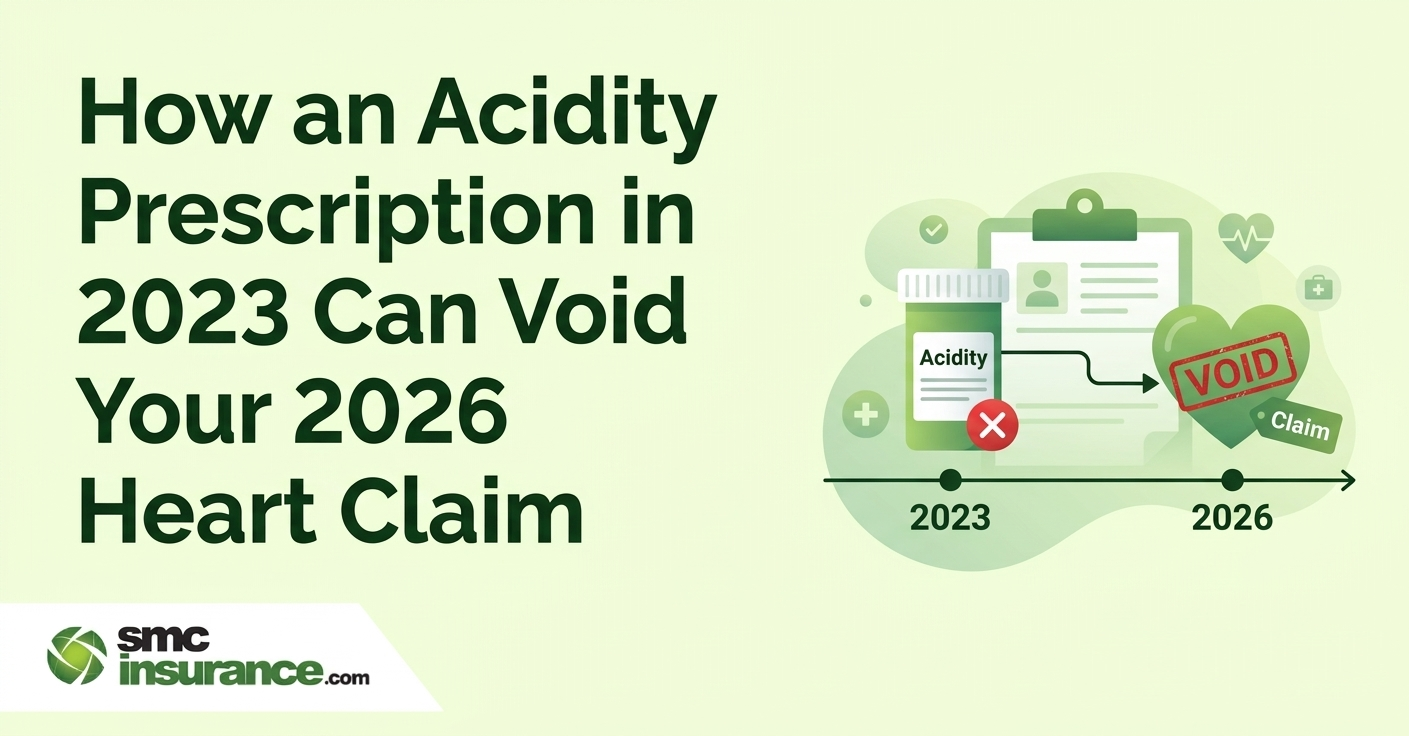

An old acidity prescription can affect a future heart insurance claim if it was not disclosed when buying the policy. Health insurers review past medical records during claim evaluation. If earlier doctor visits for acidity, GERD, or chest discomfort appear in hospital history but were not mentioned in the proposal form, the insurer may investigate the claim for non-disclosure.
Acidity itself does not usually cause claim rejection. The main issue is missing medical history. Because acidity symptoms like chest burning can overlap with heart symptoms, insurers sometimes review whether earlier signs existed before the policy started. Declaring even minor treatments when purchasing health insurance helps avoid claim delays or disputes later.
A burning chest after a heavy meal. Sour burps and a quick visit to a clinic. The doctor scribbles a prescription for acidity tablets. You take them for a few weeks and move on with life. Three years later, a heart emergency lands you in a hospital. You submit your health insurance claim. Then the insurer asks a question you never expected.
“Did you have acidity treatment in the past?”
And suddenly, a small prescription from years ago becomes the center of the claim investigation. This situation surprises many people. They assume acidity is harmless. Just gas, indigestion, or spicy food trouble. But medical records and insurance paperwork do not always treat it that casually.
Let’s unpack how something as routine as an acidity prescription in 2023 can create problems for a heart claim in 2026, and how you can avoid that situation.
A Common Story That Many People Miss
Here is a situation insurers and hospitals see often.
Let’s say Ravi, age 36, buys a health insurance policy in 2024. During the proposal form, he marks “No” for digestive issues because he believes his past acidity problem was minor. But in 2023 he had visited a doctor twice for chest burning. The doctor wrote medicines for acid reflux.
Ravi did not think this counted as a medical condition. So he did not mention it. Fast forward to 2026. Ravi suffers severe chest pain and doctors diagnose a heart attack and perform an angioplasty. Hospital bills cross Rs. 4 lakh and he files a claim. During claim review, the insurer pulls past medical records. The hospital history mentions “past GERD treatment in 2023.”
Now the insurer asks a key question: Why was this not disclosed during policy purchase?
That one missing detail may lead to:
- Claim delay
- Investigation
- Partial rejection
- In serious cases, full claim rejection
And Ravi sits in shock. All this because of acidity treatment?
Why Do Insurers Care About Old Medical Prescriptions?
Insurance companies look at health history to assess risk. This includes even small medical issues that appear unrelated. When someone buys health insurance, they fill a proposal form. This document asks for details like:
- Past illnesses
- Doctor consultations
- Medications taken
- Tests or scans
- Hospital visits
Many people assume only serious diseases matter. But insurers view medical history differently. A simple prescription may hint at an underlying condition. And when a later illness connects to that history, insurers examine disclosure very closely. If information was hidden or skipped, the claim may be questioned.
The Acidity and Heart Risk Conversation
Acidity, acid reflux, and GERD are common digestive problems. Millions deal with them each year. Doctors usually treat them using medicines such as:
- Antacids
- Proton pump inhibitors (PPIs)
- H2 blockers
Most people take these medicines for short periods. Yet some research and cardiology discussions suggest a possible link between long term acid reflux treatment and heart health. For instance, some cardiologists have raised concerns that frequent use of certain acid reducing medicines may relate to higher heart risk in certain groups.
- A report discussed in the British Heart Foundation noted that headlines linking acid reflux medicines to heart attacks can be misleading. Researchers often study complex factors like lifestyle, existing disease, and medication patterns before drawing conclusions.
- Another report covered by The Indian Express quoted cardiologists warning that long term and unnecessary use of antacids could affect heart health in some cases.
This does not mean acidity medicines cause heart attacks directly. But it shows one important thing. Digestive symptoms sometimes overlap with heart symptoms. And medical records capturing those symptoms become important during claim review.
When Acidity Symptoms Look Like Heart Symptoms
Here is where things get tricky. Acidity and heart problems share some similar warning signs. Doctors often see patients who struggle to tell the difference. Common acidity symptoms:
- Burning sensation in chest
- Sour taste in mouth
- Burping
- Bloating
- Chest discomfort after meals
Heart related symptoms may include:
- Chest pressure
- Pain spreading to arm or jaw
- Shortness of breath
- Sudden sweating
- Nausea
Chest burning or chest pain appears in both lists. That is why doctors sometimes run heart tests when patients complain of severe acidity. From an insurance perspective, this overlap matters. If a person had repeated chest pain earlier but described it only as acidity, insurers may investigate deeper when a heart event occurs later.
What Happens During a Heart Claim Investigation?
When a major claim arrives, insurers review medical records carefully. This includes:
- Hospital admission notes: Doctors record past medical history when admitting a patient.
- Prescription history: Past prescriptions may appear in pharmacy records or hospital files.
- Doctor consultation records: If you visited clinics earlier for similar symptoms, those records may surface.
- Diagnostic reports: Old ECGs, scans, or blood tests may show earlier warning signs.
Now imagine the insurer finds a prescription for GERD or acid reflux in 2023. But the policy proposal form said “No digestive problems.” That mismatch triggers scrutiny. Insurers may ask:
- Did the patient have chronic acidity?
- Were there repeated chest symptoms?
- Was the condition ongoing before policy purchase?
If answers show non disclosure, claim decisions may change.
Non Disclosure Is the Real Problem
Acidity itself rarely leads to claim rejection. The real issue is non disclosure. Insurance relies heavily on honest health declarations. If the proposal form asked questions like:
- Have you had stomach or digestive issues?
- Have you taken regular medication?
- Have you consulted a doctor in the past two years?
Then even minor treatment should be declared. Many people skip this step because they think it is too small to mention. But insurers evaluate risk using every piece of medical information. When something surfaces later, it raises a red flag.
Why Many People Do Not Mention Acidity Treatment
This happens for several reasons:
- People think acidity is normal: Spicy food, irregular meals, stress. Many assume acidity comes from lifestyle alone. So they ignore it as a health condition.
- The prescription was short term: If medicines were taken for two weeks, patients often forget the visit.
- Proposal forms look confusing: Medical questions can appear broad and unclear. So people answer quickly without recalling every consultation.
- Agents sometimes simplify things: In some cases, agents advise clients to skip minor issues to speed up approval. But that shortcut can backfire during claims.
The Insurance Rule That Many Miss
Insurance policies follow a principle called utmost good faith. Both sides must share correct information. For policyholders, this means disclosing all relevant health details. Even if the condition seems small. If a person hides or skips medical history, insurers may apply rules like claim rejection, claim reduction and policy cancellation. And this can happen years later when a large claim arrives.
How an Old Acidity Prescription Can Affect a Heart Claim
Let us connect the dots clearly:
- Step 1: In 2023, a person receives treatment for acidity or GERD.
- Step 2: In 2024, they buy health insurance but do not mention this treatment.
- Step 3: In 2026, a heart condition leads to hospitalization.
- Step 4: During claim review, past medical records show earlier chest symptoms treated as acidity.
- Step 5: Insurer reviews the proposal form and sees the missing disclosure.
Result?
The claim may face investigation or dispute. Again, the issue is not acidity itself. It is the missing medical history.
A Simple Table to Understand Claim Risk
|
Situation |
Claim Outcome Risk |
|
Acidity disclosed during policy purchase |
Usually safe. Insurer already knows history |
|
Acidity treated once but not disclosed |
Possible investigation |
|
Repeated GERD treatment not disclosed |
High chance of claim dispute |
|
Chest symptoms earlier treated as acidity |
Insurer may check if heart signs existed earlier |
This is why even small medical details matter.
Another Reason Acidity Records Matter
Doctors often treat chest discomfort as acidity first. If symptoms persist, they investigate heart problems later. So an old acidity diagnosis sometimes appears in records just before a heart disease diagnosis. From a claim perspective, insurers examine the timeline carefully. They try to determine if the heart condition existed earlier but remained undiagnosed. If they believe symptoms started before policy purchase, they may classify the illness as pre existing. And pre-existing diseases usually carry waiting periods.
The Good News Most People Miss
There is reassuring news here. Declaring acidity rarely harms your policy approval. In most cases insurers simply do one of the following:
- Accept the policy normally
- Add a short waiting period for digestive issues
- Ask for a basic medical test
That is all, your coverage still continues. But once the insurer already knows the condition, claims become much smoother later.
Where an Insurance Platform Helps
Choosing the right policy and declaring health history correctly can feel confusing. This is where platforms like SMC Insurance play a helpful role. SMC Insurance works with many leading insurance companies and helps customers compare policies from multiple insurers. More importantly, experienced advisors guide customers through proposal forms carefully. That means:
- Understanding which medical details to disclose
- Explaining insurer rules clearly
- Choosing plans that suit existing health history
Many claim disputes start because people rush through policy forms without proper guidance. Getting expert help early can prevent that.
Practical Tips to Protect Future Claims
A few simple habits can protect your health insurance claims years later:
- Keep medical records: Save prescriptions, lab reports, and consultation notes. These records help explain your health history clearly.
- Disclose even small treatments: If you visited a doctor for acidity, migraines, or allergies, mention it. Let the insurer decide its importance.
- Answer proposal forms personally: Do not let someone else fill it blindly. Read each medical question and respond honestly.
- Mention regular medicines: Even over the counter medicines taken frequently should be disclosed.
- Choose the right policy: Some plans handle pre-existing conditions better than others. An insurance platform can help compare them.
A Small Detail Can Decide a Large Claim
Hospital bills for heart treatment can reach several lakhs. Angioplasty, bypass surgery, ICU care, medicines. Costs add up quickly. At that moment, health insurance becomes crucial. But claim success depends on one simple factor. Accurate information shared at the start and a prescription written years earlier may look insignificant today. But once it appears in hospital records, it becomes part of the medical timeline. That is why transparency during policy purchase matters so much.
Must-Read Guides From SMC
- Create ABHA Card (Ayushman Bharat Health Account) Online
- Room Rent Limits and Proportionate Deduction
- How Room Rent Limit Reduces Claims
- Compare Health Insurance Plans
- Top Health Insurance companies
- Health Insurance Plans for Family
- When Does a Health Insurance Claim Get Rejected?
- Health Insurance Plans That Look Cheap But Cost More During Claims
- Policy Clauses that reduce claim payout
Summing Up,
Acidity is common and many people face it after spicy meals or long workdays. Yet medical records treat it differently from casual conversation. A doctor visit, prescription, or diagnosis becomes part of your health history. Years later, those records may appear during a major insurance claim. That does not mean acidity causes heart disease and it does not mean insurers reject claims automatically.
But missing medical details can create complications. The safest path is simple: share complete health information when buying insurance; even the small things. With the right disclosure and the right policy, your health cover works the way it should. Ready when you need it most.
Disclaimer:The information provided on this platform is intended for general awareness and educational purposes. While every effort is made to ensure accuracy, some details may change with policy updates, regulatory revisions, or insurer-specific modifications. Readers should verify current terms and conditions directly with relevant insurers or through professional consultation before making any decision.
All views and analyses presented are based on publicly available data, internal research, and other sources considered reliable at the time of writing. These do not constitute professional advice, recommendations, or guarantees of any product’s performance. Readers are encouraged to assess the information independently and seek qualified guidance suited to their individual requirements. Customers are advised to review official sales brochures, policy documents, and disclosures before proceeding with any purchase or commitment.
FAQs
Yes, if acidity treatment was taken earlier but not disclosed while buying the policy, insurers may investigate the claim. The issue usually arises due to missing disclosure, not the acidity itself.
Yes, even short-term doctor consultations or prescriptions for acidity should be declared in the proposal form. This helps avoid claim disputes later.
Insurers review medical history to understand whether symptoms existed before the policy started. Past prescriptions, including those for acidity or chest discomfort, help them assess this timeline.
Sometimes, yes. Both conditions can involve chest burning or discomfort. Because of this overlap, insurers may review earlier medical records when a heart claim is filed.
Usually not. Most insurers still approve the policy. In some cases they may add a short waiting period or request a basic medical test.


