


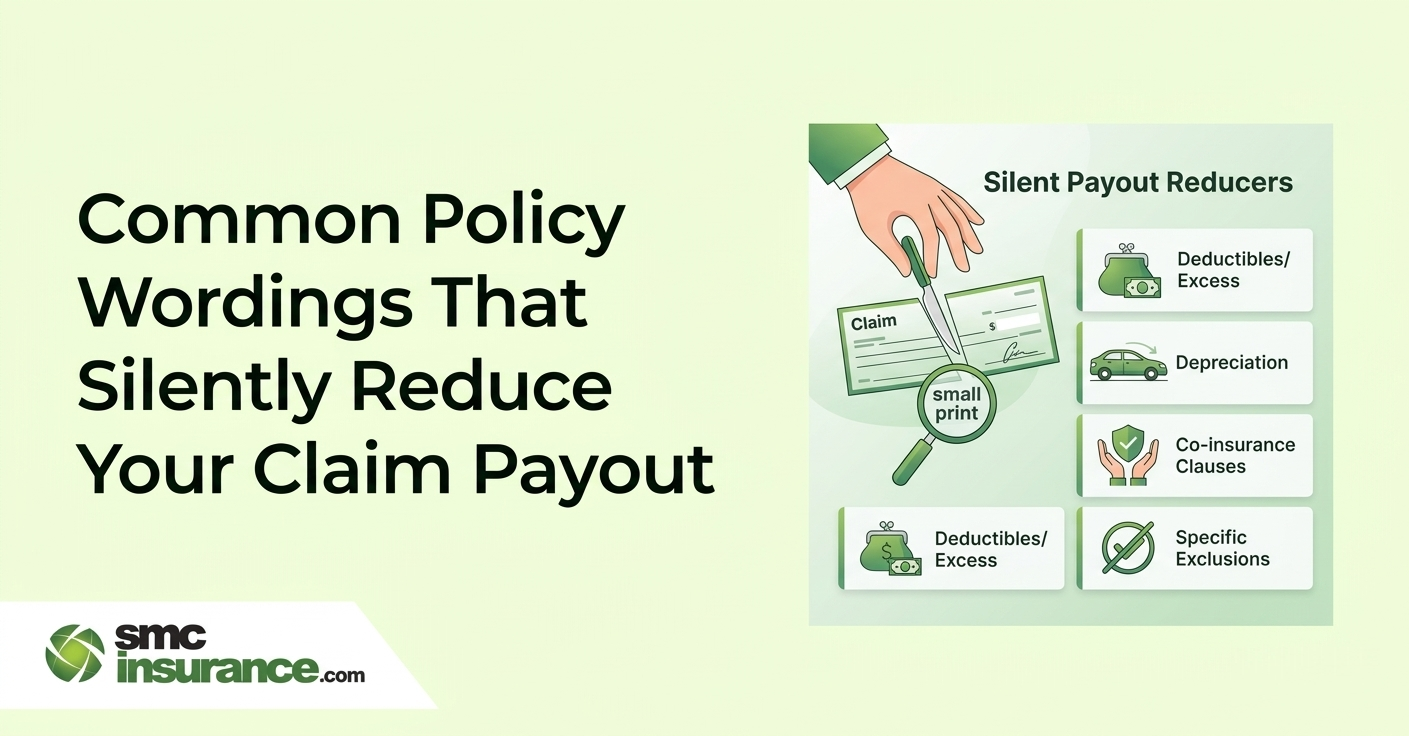

Health insurance claim payouts can be lower than expected because of specific policy clauses written in the policy wording. Common factors include room rent limits, treatment sub-limits, waiting periods, co-payment rules, deductibles, and exclusions for non-medical expenses. These clauses determine how much of a hospital bill the insurer will reimburse.
For example, if a policy has a room rent cap and the chosen room exceeds that limit, insurers may apply proportionate deductions to related costs such as doctor fees and surgery charges. Similarly, sub-limits can restrict payouts for certain treatments even if the total sum insured is higher. Understanding these policy terms before buying health insurance helps avoid unexpected out-of-pocket expenses during a claim.
Health insurance usually enters our lives during a practical moment. In some cases, it happens after a hospital bill shocks us into action. So we compare plans, check premiums and the sum insured. A policy that offers Rs. 10 lakh or Rs. 20 lakh coverage sounds reassuring. It creates the impression that large medical bills will be taken care of.
But the real working of an insurance policy does not sit in the brochure; it sits in the policy wording. That document explains how claims are calculated, what expenses qualify for reimbursement, and where limits apply. And inside those pages are a few clauses that can quietly reduce the final claim payout.
None of them are hidden tricks. They are part of the contract between the insurer and the policyholder. Yet many people overlook them while buying a policy. Later, when a hospital bill arrives and the insurer pays less than expected, confusion begins.
Why did the claim shrink?
Often, the answer lies in a handful of policy wordings that most buyers barely notice. Let’s walk through the most common clauses that influence how much money actually reaches you during a claim.
The Fine Print That Shapes Your Claim
When people read insurance documents, they often focus on two numbers: the premium and the sum insured. But the actual payout during hospitalization depends on many other factors. The policy wording defines how the insurer evaluates the hospital bill. It explains which expenses qualify, which ones face limits, and which ones fall outside coverage.
Two policies with the same sum insured may produce very different claim outcomes. One may reimburse almost the entire bill. Another may apply several deductions. This difference usually comes from clauses such as:
- Room rent limits
- Treatment sub-limits
- Waiting periods
- Co-payment rules
- Non-medical exclusions
- Deductibles
Each clause may look small while reading the policy. Yet together they shape the final claim amount.
➔ Room Rent Limit: A Clause That Can Affect the Entire Bill
Let’s start with one of the most important clauses in health insurance: Room rent.
Many policies place a cap on the daily room rent allowed during hospitalization. The limit often appears as a percentage of the sum insured. For example, a policy might allow 1% of the sum insured per day as room rent.
Imagine a policy with Rs. 5 lakh coverage. The permitted room rent becomes Rs. 5,000 per day. But hospital rooms in many cities cost more than that. A private room could easily cost Rs. 7,000 or Rs. 8,000. This means that if a patient chooses a room that exceeds the allowed limit, insurers may apply something called proportionate deduction.
And this is where the impact grows. The insurer does not reduce only the room rent. The deduction can apply to several other components of the bill. These may include:
- Doctor consultation charges
- Nursing fees
- Operation theatre charges
- Surgeon fees
- Medical procedure costs
Hospitals often link several service charges to the room category. A higher room category often comes with higher doctor fees and service charges. So if the chosen room costs more than the allowed limit, the insurer reduces the claim proportionally.
For example, if the room rent exceeds the limit by 40%, the insurer may reduce other associated expenses by the same ratio. A hospital bill of Rs. 2 lakh could shrink to Rs. 1.3 lakh or Rs. 1.4 lakh.
Many policyholders expect only the room cost to be reduced. But the deduction often spreads across multiple charges. Which is why checking the room rent clause is one of the most important steps while buying health insurance. Some modern policies now offer no room rent limit or allow a single private room without restrictions. These options help avoid proportionate deductions during claims.
➔ Sub-Limits on Specific Treatments
Another clause that quietly influences claims is the sub-limit. A sub-limit is a cap placed on the payout for certain treatments or medical procedures. Even if the overall policy coverage is high, the insurer may restrict the amount paid for specific procedures.
Common examples include:
- Cataract surgery
- Knee replacement
- Hernia surgery
- Tonsillectomy
- Certain cardiac procedures
For instance, a policy may limit cataract surgery reimbursement to Rs. 40,000 per eye. Now imagine the hospital charges Rs. 70,000 for the surgery. The insurer will reimburse only Rs. 40,000. The remaining Rs. 30,000 becomes the policyholder’s responsibility.
Sub-limits were common in many older health insurance plans. They helped insurers manage costs and prevent excessive billing. But for policyholders, they can create unexpected out-of-pocket expenses. Some modern policies have removed sub-limits entirely, while others still retain them for certain procedures.
➔ Waiting Periods: Coverage That Begins Later
Health insurance does not usually cover every illness from the first day of the policy. Most policies include waiting periods for specific conditions. There are three common types.
- Initial Waiting Period
This period usually lasts around 30 days from the policy start date. During this time, claims for most illnesses are not covered unless they arise from accidents. The purpose is to prevent people from buying insurance after falling ill and immediately filing claims.
- Disease-Specific Waiting Period
Certain illnesses carry longer waiting periods. These may range from one to four years depending on the policy. Conditions often included in this category are: -
- Cataract
- Hernia
- Kidney stones
- Piles
- Joint replacement
If treatment occurs during the waiting period, the insurer may reject the claim.
- Pre-Existing Disease Waiting Period
If a person already has conditions such as diabetes, hypertension, asthma, or thyroid disorders before buying the policy, they are classified as pre-existing diseases. The insurer may impose a waiting period of two to four years before covering treatments related to those conditions. This clause does not reduce claim amounts directly. Instead, it delays eligibility for coverage. Yet many policyholders discover it only when they try to claim early in the policy.
➔ Reasonable and Customary Charges
Health insurance policies often include the phrase reasonable and customary charges. This wording gives insurers the right to assess hospital bills based on typical treatment costs in a particular location. If a hospital charges significantly more than the usual market rate, the insurer may limit reimbursement to what it considers reasonable.
For example, suppose a hospital charges Rs. 1.5 lakh for a procedure. If the insurer’s internal data suggests that the average cost of that procedure in the same city is Rs. 1 lakh, the claim payout may be limited to that amount. The remaining Rs. 50,000 may not be reimbursed.
This clause exists to prevent inflated hospital billing. However, policyholders rarely know what insurers consider “reasonable” until the claim is processed. Choosing hospitals within the insurer’s network can sometimes reduce such surprises, as pricing structures are often pre-agreed.
➔ Non-Medical Expenses: The Hidden Portion of Hospital Bills
When people imagine a hospital bill, they think mainly of treatment costs. But hospital bills also include many smaller items. These might include:
- Registration charges
- Admission kits
- Gloves and masks
- Sanitization supplies
- Administrative fees
- Service charges
Insurance policies often classify these as non-medical expenses. Most standard policies do not reimburse them. While each item appears small, together they can add up.
For example, a hospital bill of Rs. 1 lakh may contain Rs. 8,000 to Rs. 15,000 worth of such charges. That portion of the bill remains payable by the patient. Some insurers now offer add-ons that cover certain non-medical expenses. But they are not standard across all policies.
➔ Co-Payment Clauses
Another clause that reduces claim payouts is co-payment. Under a co-payment arrangement, the policyholder shares a percentage of the claim amount. For example, if the policy includes a 20% co-payment clause and the hospital bill is Rs. 1 lakh, the insurer pays Rs. 80,000 while the policyholder pays Rs. 20,000. Co-payment clauses are common in:
- Senior citizen health insurance plans
- Policies with lower premiums
- Certain regional coverage conditions
They help insurers control risk and keep premiums more affordable. But they also ensure that the policyholder bears part of every claim.
➔ Deductibles in Top-Up and Super Top-Up Policies
Deductibles work differently from co-payment. A deductible is a fixed amount that the policyholder must pay before the insurance coverage begins. This clause is commonly used in top-up and super top-up health insurance plans.
For example, suppose a super top-up plan has a deductible of Rs. 5 lakh. If the hospital bill is Rs. 7 lakh, the policyholder pays the first Rs. 5 lakh and the insurer covers the remaining Rs. 2 lakh. These plans are designed to supplement an existing base health insurance policy.
They provide higher coverage at lower premiums because the insurer begins paying only after the deductible threshold. While useful for large medical bills, deductibles can confuse buyers who expect coverage from the first rupee.
➔ Disease-Specific Benefit Caps
Some policies place limits on certain types of medical care even when overall coverage is high. Common areas include:
- Maternity treatment
- Bariatric surgery
- Dental treatment
- Alternative medicine treatments
For instance, a policy might include maternity coverage but cap the benefit at Rs. 50,000. In many private hospitals, childbirth expenses can exceed Rs. 1 lakh. In such cases, the insurer pays only the capped amount.
These limits are typically listed under the schedule of benefits section in the policy document.
Let’s look at a Real-Life Claim Scenario
Consider a policyholder named Ananya. She buys a health insurance policy with a Rs. 5 lakh sum insured. Later, she undergoes surgery and the hospital bill reaches Rs. 2.5 lakh.
At first glance, the policy should cover the entire amount. But during claim processing, several deductions appear. Here’s what happens:
The room chosen during hospitalization exceeds the allowed limit. This triggers proportionate deductions across several charges. Some items in the bill fall under non-medical expenses and are removed. The surgery itself has a treatment sub-limit. By the time the claim settles, the insurer pays Rs. 1.7 lakh.
And, Ananya must cover the remaining Rs. 80,000. The policy did work. But certain clauses influenced the final payout. This situation is not unusual. It happens when buyers focus only on premium and coverage amount without examining the policy wording.
What Buyers Should Check Before Choosing a Policy?
A few careful checks can prevent unpleasant surprises later. While comparing policies, it helps to look at the following features:
- Room rent restrictions
- Presence of treatment sub-limits
- Waiting period duration
- Co-payment requirements
- Deductible conditions
- Coverage for modern treatments
Policies that avoid strict limits often offer more predictable claim payouts. Taking time to read the policy document may seem tedious. But it is the most reliable way to understand how coverage actually works.
Why Can Guidance Help?
Insurance documents often contain legal language that feels difficult to interpret. This is where experienced advisors can play an important role. Platforms like SMC Insurance help people compare health insurance policies from multiple insurers while explaining key clauses in simple language.
This helps customers choose policies that offer more reliable financial protection during medical emergencies.
Must-Read Guides From SMC
- Create ABHA Card (Ayushman Bharat Health Account) Online
- Room Rent Limits and Proportionate Deduction
- Sub-Limits in Health Insurance
- Compare Health Insurance Plans
- Top Health Insurance Companies
- How Room Rent Limit Reduces Claims
- When Does a Health Insurance Claim Get Rejected?
- Health Insurance Plans That Look Cheap But Cost More During Claims
- How an Acidity Prescription Can Void Your Heart Claim
Summing Up,
Insurance policies aim to provide financial protection when medical expenses arise. But the strength of that protection depends on the policy wording. A room rent clause can affect the entire hospital bill. A treatment sub-limit can cap the payout for surgery. A co-payment rule can shift part of the cost back to the policyholder. They are standard elements of insurance contracts and they can influence claim payouts far more than most people expect. Which is why understanding the fine print matters.
Disclaimer:The information provided on this platform is intended for general awareness and educational purposes. While every effort is made to ensure accuracy, some details may change with policy updates, regulatory revisions, or insurer-specific modifications. Readers should verify current terms and conditions directly with relevant insurers or through professional consultation before making any decision.
All views and analyses presented are based on publicly available data, internal research, and other sources considered reliable at the time of writing. These do not constitute professional advice, recommendations, or guarantees of any product’s performance. Readers are encouraged to assess the information independently and seek qualified guidance suited to their individual requirements. Customers are advised to review official sales brochures, policy documents, and disclosures before proceeding with any purchase or commitment.
FAQs
Several policy clauses can reduce the final payout. Common reasons include room rent limits, treatment sub-limits, co-payment rules, non-medical expense exclusions, and reasonable and customary charge limits. These conditions determine how the insurer calculates the claim amount.
A room rent limit is a cap on how much the insurer will pay for the hospital room per day. If the chosen room costs more than the allowed limit, insurers may apply proportionate deductions to other related charges such as doctor fees, nursing charges, and surgery costs.
Sub-limits are caps on the amount an insurer will pay for certain treatments or procedures. For example, a policy may limit cataract surgery reimbursement to a fixed amount even if the overall coverage is much higher.
Waiting periods are the timeframes during which certain illnesses or treatments are not covered after purchasing the policy. These may include an initial waiting period, disease-specific waiting periods, and waiting periods for pre-existing conditions.
Non-medical expenses are items that are not directly related to treatment, such as registration charges, admission kits, gloves, and administrative fees. Most standard health insurance policies do not reimburse these costs, so the policyholder must pay them separately.


