



BYD car prices in India start at around Rs. 24.99 lakh (ex-showroom) for the BYD Atto 3 and go up to about Rs. 54.90 lakh for the BYD Sealion 7. The brand currently sells four models in India: Atto 3, eMAX 7, Seal, and Sealion 7. On-road prices typically range from about Rs. 26.5 lakh to nearly Rs. 59 lakh, depending on the model, city, insurance, and state EV subsidies.
In just a couple of years, BYD has shifted from being a "new kid on the block" to a dominant player in the Indian electric vehicle (EV) scene. They aren’t just selling cars; they are selling a specific kind of futuristic confidence. If you’ve been spotting those sleek SUVs and low-slung sedans in your city, you’ve probably wondered what the entry price for that lifestyle actually is.
At SMC Insurance, we’ve been watching this growth closely. As a platform that connects you with the country’s leading insurers, we see how the shift to high-end EVs like BYD is changing the way people think about car value and protection.
BYD Car Price in India 2026 (Overview Table)
Prices for BYD cars have stabilized somewhat in 2026, though the lineup has expanded. Here is a quick glance at the current ex-showroom prices for the models you’ll find in showrooms today.
|
Model |
Variant Type |
Battery Capacity |
Ex-Showroom Price (Approx.) |
|
BYD Atto 3 |
SUV |
49.92 – 60.48 kWh |
Rs. 24.99 – Rs. 33.99 Lakh |
|
BYD eMAX 7 |
MUV |
55.4 – 71.8 kWh |
Rs. 26.90 – Rs. 29.90 Lakh |
|
BYD Seal |
Sedan |
61.44 – 82.56 kWh |
Rs. 41.00 – Rs. 53.15 Lakh |
|
BYD Sealion 7 |
SUV |
82.56 kWh |
Rs. 49.40 – Rs. 54.90 Lakh |
BYD Cars in India: In Detail
It helps to think of BYD's lineup not just as "expensive electric cars," but as different tools for different lives. They don't really do "entry-level" in the traditional sense; even their most affordable car feels like a premium product.
- The BYD Atto 3
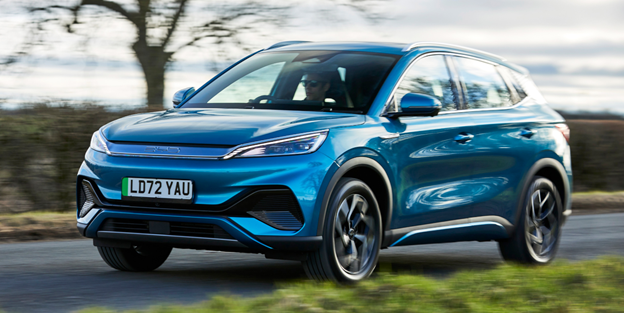
The Atto 3 is the heart of the brand. It’s a mid-size SUV that feels like it was designed by someone who loves both fitness and sci-fi—the interior has guitar-string door pockets and treadmill-style air vents. -
- Performance: It puts out about 201 bhp, which means it’s plenty fast for highway overtaking.
- Range: Depending on the battery you pick, you’re looking at 468 km to 521 km (ARAI). In the real world, that usually means a stress-free week of city commuting.
- The BYD eMAX 7
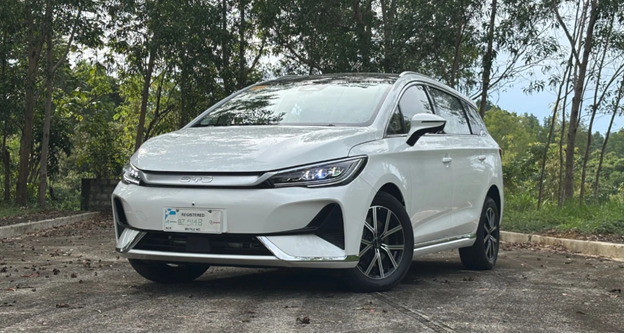
Replacing the older e6, the eMAX 7 is for the family man who wants to skip the petrol pump. It’s a 6 or 7-seater MPV that targets the space occupied by the Toyota Innova but with a silent electric heart. -
- Key Specs: It offers a range of up to 530 km, making it one of the few EVs that can actually handle a family road trip without constant "range anxiety."
- Key Specs: It offers a range of up to 530 km, making it one of the few EVs that can actually handle a family road trip without constant "range anxiety."
- The BYD Seal
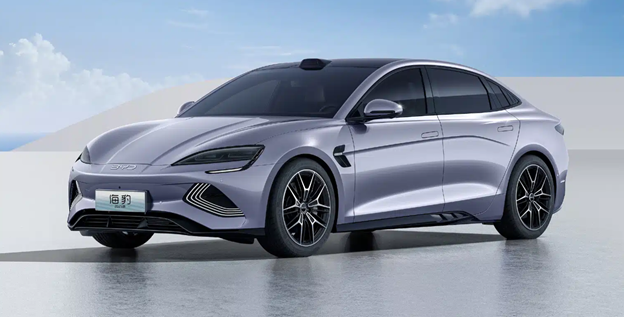
This is the showstopper. The Seal is a luxury performance sedan that rivals the likes of BMW and Audi but at a lower price point. It’s incredibly sleek and features "Cell-to-Body" tech, where the battery is actually a part of the car's structure. -
- The "Wow" Factor: The top-spec Performance AWD version hits 0-100 km/h in 3.8 seconds. That is properly fast.
- The "Wow" Factor: The top-spec Performance AWD version hits 0-100 km/h in 3.8 seconds. That is properly fast.
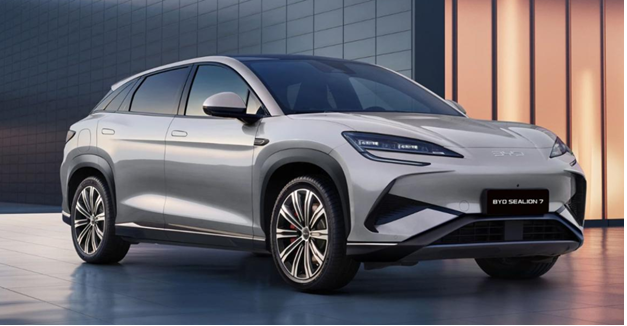
- The BYD Sealion 7
The newest flagship, the Sealion 7, is a sportier, more powerful SUV for those who want the performance of the Seal but the ground clearance of an SUV. It’s the brand's way of saying they can do luxury just as well as the Europeans.
BYD Car On-Road Price in India 2026 (Model-Wise Breakdown)
When you move from the "ex-showroom" sticker to the "on-road" reality, things change. Fortunately, many Indian states still offer zero or heavily discounted road tax for EVs, which helps keep the final cost closer to the base price compared to petrol cars.
|
Model |
Ex-Showroom |
Est. On-Road (Delhi/Mumbai) |
|
Atto 3 (Dynamic) |
Rs. 24.99 Lakh |
Rs. 26.50 – Rs. 27.20 Lakh |
|
eMAX 7 (Premium) |
Rs. 26.90 Lakh |
Rs. 28.40 – Rs. 29.10 Lakh |
|
Seal (Premium) |
Rs. 45.70 Lakh |
Rs. 48.20 – Rs. 49.50 Lakh |
|
Sealion 7 (Performance) |
Rs. 54.90 Lakh |
Rs. 57.80 – Rs. 59.30 Lakh |
Note: On-road prices fluctuate based on state subsidies, registration fees, and the car insurance plan you choose.
Why Are BYD Cars So Expensive in India?
If you’re coming from a petrol-car background, these numbers might feel high. But there’s a reason for the premium, and it isn't just "the EV tax."
- The "Blade Battery" Premium
BYD makes its own batteries. Their Blade Battery is famous for being incredibly safe (it can be pierced by a nail without catching fire) and very long-lasting. You’re paying for a battery that is likely to outlast the car itself.
- Import Costs and Assembly
While BYD has a presence in India, many of their high-end models (like the Seal) arrive as sophisticated kits or fully built units. High import duties on parts mean the price naturally climbs higher than a car made entirely in a local plant.
Breaking Down the Cost: Where Does Your Money Actually Go?
When you pay for a BYD, you aren't just paying for the metal. Here is how that Rs. 30-50 Lakh is distributed:
- The Tech Stack: You're paying for an 8-in-1 powertrain system that is more efficient than almost anything else on the road.
- Safety Features: BYD cars consistently bag 5-star safety ratings. You’re paying for 7-9 airbags, radar-based ADAS, and high-strength steel.
- The Interior: High-quality vegan leather, rotatable touchscreens, and premium sound systems come standard.
How to Buy a BYD in India?
The process is fairly straightforward, but because they are a premium brand, the experience is a bit more "boutique" than your average car dealership.
- Locate a Dealer: BYD now has over 40 touchpoints across India, mostly in Tier-1 and major Tier-2 cities.
- The Test Drive: This is crucial. EV torque feels different. You should feel how the "one-pedal" driving or regenerative braking feels to you.
- The Booking: Usually requires a token amount of Rs. 50,000 to Rs. 1,00,000.
- Insurance & Financing: This is where we come in. Since BYDs have specific tech, you need an insurance partner that understands "Battery Replacement Value" and "Return to Invoice" covers.
Maintenance and Service of the BYD car in India
One of the best "kept secrets" of BYD ownership is that once you pay the high upfront cost, the maintenance is surprisingly low.
- Service Intervals: Unlike petrol cars that need an oil change every 10,000 km, BYDs typically only need a check-up every 20,000 km or 12 months.
- Cost: Since there are no spark plugs, oil filters, or complex transmissions, a standard service is often just a software update and a brake/tire check.
Important Considerations for Ownership
Before you dive in, keep a few things in mind:
- Charging Setup: Do you have a dedicated parking spot where you can install the 7kW home charger?
- Resale Value: The used EV market in India is still young. While the battery warranty is 8 years, we don't yet have decades of data on how these hold their value compared to a Toyota.
- Insurance is Key: Because the parts are high-tech, a small fender-bender can be expensive. Always opt for a comprehensive plan with Zero Depreciation.
Competing Luxury Brands in India (2026)
BYD doesn't exist in a vacuum. In 2026, the competition is getting fierce.
|
Competitor Car |
Fuel Type |
Price Range (Ex-Showroom) |
Key Rivalry |
|
Hyundai Ioniq 5 |
Electric |
Rs. 46 – Rs. 48 Lakh |
Competes with Seal/Sealion 7 |
|
Kia EV6 |
Electric |
Rs. 60 – Rs. 65 Lakh |
Competes with Sealion 7 |
|
BMW i4 |
Electric |
Rs. 72 – Rs. 78 Lakh |
The "Branded" alternative to the Seal |
|
Mahindra XEV 9e |
Electric |
Rs. 22 – Rs. 31 Lakh |
Competes with Atto 3 |
Must-Read Guides From SMC
- Car Insurance Buying Guide
- Best Car Insurance Companies in India
- Bugatti Car Price in India
- Lamborghini Car Price In India
- Tesla Car Price in India
- Upcoming Cars in India
- Best Tyres For Cars In India
- 10 Safest Cars In India
- Types of number plates in India
- Check PUC Status Online
- PUC Validity Guide for a New Car
- Get Car RTO Details
Summing Up,
Buying a BYD in 2026 is a statement. It says you’re ready for the future, you value safety, and you’re okay with standing out from the crowd. While the upfront price is premium, the combination of low running costs and high-end tech makes a compelling case.
At SMC Insurance, we want to make sure your leap into the electric future is a safe one. We’ve partnered with insurers who specialize in EV-specific risks, ensuring that your Blade Battery and all that high-tech cabin equipment are fully protected from day one.
Disclaimer:The information provided on this platform is intended for general awareness and educational purposes. While every effort is made to ensure accuracy, some details may change with policy updates, regulatory revisions, or insurer-specific modifications. Readers should verify current terms and conditions directly with relevant insurers or through professional consultation before making any decision.
All views and analyses presented are based on publicly available data, internal research, and other sources considered reliable at the time of writing. These do not constitute professional advice, recommendations, or guarantees of any product’s performance. Readers are encouraged to assess the information independently and seek qualified guidance suited to their individual requirements. Customers are advised to review official sales brochures, policy documents, and disclosures before proceeding with any purchase or commitment.
FAQs
The starting ex-showroom price of BYD cars in India is around Rs. 24.99 lakh for the BYD Atto 3. The brand’s lineup currently goes up to about Rs. 54.90 lakh for the BYD Sealion 7.
The BYD Atto 3 is the most affordable model in the lineup. It is a mid-size electric SUV priced between Rs. 24.99 lakh and Rs. 33.99 lakh (ex-showroom).
BYD cars are priced higher mainly due to advanced battery technology, premium features, and import duties on components. The brand also uses its proprietary Blade Battery and advanced EV powertrain systems.
The on-road price varies by city and state subsidies. For example, the BYD Atto 3 can cost around Rs. 26.5 lakh to Rs. 27.2 lakh on-road, while higher-end models like the Sealion 7 can reach nearly Rs. 59 lakh.
No. BYD electric cars generally have lower maintenance costs than petrol or diesel cars because they have fewer moving parts and do not require engine oil changes. Service checks are usually needed every 20,000 km or once a year.


