A tractor is one of the hardest working machines in rural India. It prepares soil before sunrise, pulls loads through rough terrain, runs farm equipment and often keeps going long after sunset. For many owners, it provides income, stability and daily survival.
When a tractor stops working, work stops. Income gets delayed. Repair costs can hit savings hard. One accident, one fire, or one theft incident can create a financial problem that takes months or years to recover from. That is where tractor insurance plays a role. It protects tractor owners from large, sudden expenses that come from damage, accidents, or legal claims.
This guide explains tractor insurance as a part of commercial vehicle insurance from the ground up so you can make a clear decision.
Why Tractor Insurance Matters Today?
Farming and rural work have changed a lot. Machines are more advanced and yes, repairs cost more. Roads have more traffic and weather patterns are less predictable. A tractor today operates in multiple environments:
Agricultural fields
Village roads
Highways during transport
Construction sites in some cases
Storage yards and open land
And with each place there comes big risks. Commercial insurance helps handle the cost if something goes wrong.
Rising Repair Costs Modern tractors have advanced engines, hydraulic systems, sensors and electronic components. Repairing even one major part can be expensive. Tractor insurance reduces that burden.
Legal Responsibility If a tractor causes injury to another person or damages property, the owner can be legally responsible for compensation. Commercial vehicle insurance protects you from paying this fully from your own pocket.
Theft Risk Tractors are valuable and often stored in open or semi-secure locations. Theft is still a real risk in many areas.
Natural Events Floods, storms, landslides and fire accidents can damage tractors without warning. Insurance acts as backup protection.
What Tractor Insurance Actually Does
At its simplest level, tractor insurance protects against financial loss linked to damage, theft, accidents and legal claims. Instead of paying full repair or replacement costs alone, the insurer shares the financial responsibility based on policy terms.
Insurance cannot stop accidents but it makes recovery easier when they happen.
Types of Tractor Insurance Policies
There are two main policy types available:
Third Party Tractor Insurance This is the basic level of protection and is required by law when tractors are driven on public roads. It covers:
Injury or death caused to another person
It does not cover damage to your tractor.
It does not cover damage to your tractor.
This type is cheaper but gives limited protection.
Comprehensive Tractor Insurance This is broader protection. It includes third party coverage plus protection for your own tractor. It usually covers:
Accident damage
Fire damage
Theft
Natural disasters
Transport damage
Most tractor owners prefer comprehensive cover since it protects both legal and machine risks.
What is Covered and Not Covered in Tractor Insurance
Here’s a better look at the coverage you can get:
Accident Damage This includes collision with vehicles, trees, walls, animals, or other objects. It also covers overturning, which can happen on uneven land.
Fire Damage Covers loss due to fire, short circuit, or accidental ignition. Fire damage often leads to total loss, so this cover is important.
Theft Protection If the tractor is stolen, the insurer compensates based on the insured value after verification.
Natural Disaster Protection Many policies include floods, storms, cyclones, earthquakes and landslides. Coverage depends on location and insurer terms.
Riot or Vandalism Damage Some policies cover damage during riots, strikes, or intentional damage by others.
Insurance is not designed for every situation. Some common exclusions include:
Normal wear and tear
Age related deterioration
Mechanical failure without accident
Damage due to illegal usage
Driving under alcohol or drugs
Using tractor outside declared purpose
Claims after policy expiry
Knowing exclusions helps avoid claim rejection.
Tractor Usage Type Matters Insurance pricing and coverage depend heavily on usage type.
Agricultural Use Covers tractors used for:
Ploughing
Harvesting
Hauling farm produce
Running farm tools
Premium is usually lower here.
Commercial or Contract Work Covers tractors used for:
Construction work
Rental services
Material transport for business
Risk is higher, so premium is higher.
Incorrect usage declaration can lead to claim rejection. Always give correct usage details.
Understanding Insured Declared Value (IDV)
IDV is the current market value of your tractor. It is the amount you receive if the tractor is stolen or completely damaged. IDV depends on:
Purchase price
Age of tractor
Depreciation
Model demand in market
Choosing the correct IDV is important. Lower IDV means lower payout and a higher IDV means higher premium.
Add On Covers That Can Strengthen Protection
Base tractor insurance gives solid protection, but add-ons help close small gaps that can turn into big expenses later. Many tractor owners skip add-ons to save money upfront. Later, during a claim, they realize certain damages are only partly covered. Add-ons let you customize your policy based on how and where your tractor is used. The goal is simple. Pay a little extra now to avoid paying a large amount later.
Not every add-on is needed for every tractor owner. The right choice depends on tractor age, location, usage pattern and storage conditions. Let’s look at the most useful ones in detail.
Zero Depreciation Cover
Normally, when parts are replaced during a claim, insurers deduct depreciation based on part age. This means you pay part of the cost from your pocket. Zero depreciation cover reduces or removes that deduction on many parts. This add-on is especially useful when:
The tractor is new or under 5 years old
Spare parts are expensive
The tractor is used daily
For example, if a damaged metal or plastic part needs replacement, standard insurance may deduct depreciation. With zero depreciation, the payout is much closer to actual repair cost. For owners who depend heavily on one tractor, this add-on often pays for itself during the first major repair claim.
Engine Protection Cover
The engine is the heart of the tractor. Engine repairs are often the most expensive repairs. Base policies usually cover engine damage only if it happens during an accident. They may not cover damage caused by water entering the engine or oil leakage. Engine protection add-on covers situations like:
Water entering engine during floods or heavy rain
Engine seizure due to oil leakage
Hydrostatic lock damage
This add-on is very useful in fd prone regions, areas with heavy seasonal rainfall, low lying farm land, locations near rivers or canals, etc. Even one major engine repair can cost a large amount. This add-on helps reduce that financial shock.
Tyre Protection Cover
Tractor tyres are heavy duty but also expensive. Standard policies usually do not cover tyre damage unless the tractor meets with an accident. Tyre protection add-on covers damage caused by cuts, bulges, burst damage, impact damage, etc. This is useful when tractors operate on:
Rocky terrain
Construction areas
Gravel roads
Uneven farm paths
Tyre replacement costs can be high. For tractors working in harsh ground conditions, this add-on is often practical.
Accessories and Attachment Cover
Many tractors today run with additional attachments like rotavators, seeders, loaders, or trolleys. Base policies may not fully cover these unless declared. This add-on protects:
Attached equipment
Farming tools connected to tractor
Special utility attachments
This is especially helpful for multi-purpose tractors, contract farming work, equipment heavy operations and so on. Without this cover, attachment damage may not be paid fully during claims.
Return to Invoice Cover (For New Tractors)
If a new tractor is stolen or totally damaged, normal payout is based on IDV, which reduces each year. Return to invoice cover pays the original purchase invoice value instead of reduced IDV. This add-on is useful for:
Brand new tractors
Loan financed tractors
High value models
It helps reduce financial loss during total loss situations.
Roadside Assistance Cover
Though tractors are built strong, breakdowns can still happen during transport. Roadside assistance may include:
Towing support
On spot minor repair help
Fuel delivery support in some cases
This add-on is useful when tractors travel long distances between farms or worksites.
Remember that not every owner needs every add on. Thus, choosing wisely saves money.
How is Premium Calculated?
Premium depends on multiple factors:
Tractor value
Tractor age
Usage type
Location risk
Add ons selected
Claim history
No claim bonus
Good driving and fewer claims help keep premiums lower over time.
Claim Process Step by Step
When something happens to your tractor, the last thing you want is confusion. A clear claim process helps reduce stress and gets your tractor back to work faster. While the exact steps can vary slightly across insurers, most tractor insurance claims follow a similar path. Knowing these steps in advance makes the process smoother.
Step 1
Inform the Insurer Immediately
As soon as an accident, damage, or theft occurs, inform the insurer. Delays can complicate the claim. You will usually need to share your policy number, tractor registration details, date and location of incident, brief description of what happened.
In case of theft or major damage, an FIR is often required. Early reporting helps the insurer assess the situation accurately and speeds up further steps. At SMC Insurance, we help customers notify the insurer correctly so important details are not missed.
Step 2
Prevent Further Damage
After reporting the claim, take reasonable steps to prevent further loss. This may include:
Moving the tractor to a safer location
Avoiding operation if damage is serious
Protecting exposed parts from weather
Insurance expects owners to reduce additional damage where possible. Simple actions at this stage can help avoid claim disputes later.
Step 3
Prevent Further Damage
The insurer appoints a surveyor to inspect the tractor and assess the damage. The surveyor then examines damaged parts, takes photographs, confirms cause of damage and reviews usage details. Surveyors usually visit the location or workshop where the tractor is kept. Cooperation and accurate information help the inspection move faster.
Step 4
Repair Estimate Approval
Once inspection is complete, the workshop prepares a repair estimate. This is shared with the insurer for approval. The insurer checks:
Whether damage is covered
Cost of repairs
Applicable deductibles
Depreciation or add-on benefits
After approval, repairs can begin. If cashless service is available, payment goes directly to the workshop.
Step 5
Repair or Settlement
Repairs are completed based on an approved estimate. Two settlement types exist:
Cashless claim: Insurer pays workshop directly
Reimbursement claim: Owner pays first and insurer reimburses later
Cashless claims are simpler when network workshops are used.
Step 6
Final Documents and Claim Closure
After repair or settlement, the repair bills are submitted, final inspection takes place and the claim is closed by the insurer. For theft or total loss cases, settlement may take longer due to investigation and documentation requirements.
Documents Needed for Buying Tractor Insurance
Usually required documents include:
Tractor RC
Owner identity proof
Address proof
Previous insurance copy
Tractor invoice for new purchase
Importance of Timely Renewal Late renewal can create problems:
Loss of coverage
Higher premium
Inspection requirement
Loss of bonus benefits
Always renew before expiry.
How to Choose the Right Tractor Insurance Plan?
Choosing the right plan is not just price comparison.
Understand Usage Pattern
Daily farm work needs different protection than contract work.
Compare Coverage Features
Look at actual coverage, not only premium.
Check Claim Support
Fast claim support matters during emergencies.
Review Add Ons Carefully
Pick only useful ones.
Mistakes Many Tractor Owners Make
Even with the right policy in place, problems can still happen if small but important details are missed. Many tractor owners only learn these lessons after a rejected claim or unexpected expense. Most of these mistakes are easy to avoid once you know what to watch for. sBelow is a simple breakdown of common mistakes and what to do instead:
Common Mistake
What Usually Happens
Better Approach
Buying the cheapest policy without checking coverage
Important damages may not be covered during claims
Compare coverage features first, price second
Giving incorrect tractor usage details
Claims can be rejected if usage does not match policy
Always declare actual usage honestly
Skipping useful add-ons to save small premium
Large repair costs later during claims
Choose add-ons based on real risk exposure
Forgetting renewal date
Policy lapses and protection stops
Set renewal reminders or enable auto renewal
Not reading exclusions
Claim surprises during settlement
Understand what is not covered before buying
Delaying claim reporting
Claim process becomes slower or complicated
Inform insurer immediately after incident
Not maintaining tractor properly
Some damage may be denied as wear and tear
Follow regular maintenance schedule
Losing policy or claim documents
Delays in claim processing
Keep digital and physical copies safely
Doing repairs before inspection approval
Claim amount may be reduced
Wait for surveyor or insurer approval first
Long Term Benefits of Tractor Insurance Good insurance does more than cover repair costs. It helps:
Maintain financial stability
Protect loan financed tractors
Maintain farm productivity
Reduce stress during emergencies
Improve resale confidence
Who Needs Tractor Insurance? Tractor insurance is useful for:
Farmers with own tractors
Farm contractors
Rural transport operators
Small construction contractors
Tractor rental service providers
SMC Insurance works as a platform connecting customers with multiple insurers. With us, customers get multiple insurer comparisons, clear explanation, help during renewal, help choosing add ons. This helps customers make informed decisions.
Real World Situations Where Tractor Insurance Helps
Situation 1: Negligent Parking Results in Motorcycle Collision
In February 2019, a tractor-trailer was parked without lights or indicators on a road in Nagarkurnool district, Telangana. A motorcyclist collided with it and succumbed to injuries. The court directed the tractor's driver, owner and insurer to collectively pay Rs. 13.91 lakhs to the victim's family, highlighting the importance of adhering to safety norms.
In June 2018, a farmer's tractor was stolen in Rajasthan. Although the insurer initially rejected the claim citing unauthorized commercial use, a consumer court in Banaskantha ruled that the insurer must pay 75% of the insured amount, acknowledging the breach but also the genuine loss suffered by the farmer.
How Tractor Insurance Supports Rural Financial Stability?
Unexpected repair costs often lead to loans or asset sales. Insurance prevents sudden financial pressure and protects long term income. For many families, one tractor supports the entire household income. Tractor insurance protects that income source.
Future of Tractor Insurance in India
Insurance is becoming more customized and insurance companies are now offering flexible add ons, faster claims and digital policy management. As tractors become more advanced, commercial insurance will play a bigger role in protecting investment value.
How to Buy Tractor Insurance from SMC?
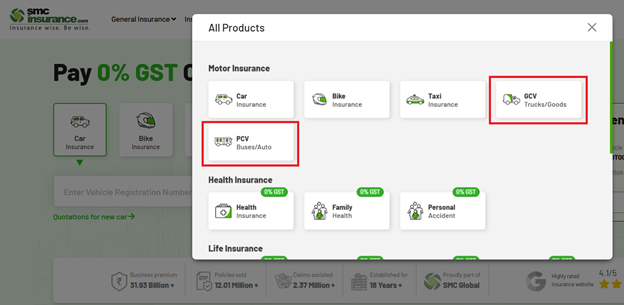
Getting commercial vehicle insurance through SMC’s website is quick and straightforward:
From the available options, select if your vehicle is GCV (Goods Carrying Vehicle) or PCV (Passenger Carrying Vehicle)
Step 3
Once chosen, you will be taken to the respective page. You can use the on-screen widget and enter your vehicle number and click on “View Quotes”. This will directly take you to the commercial insurance buying process of SMC Insurance.
Step 4
Fill in the required vehicle details. This includes vehicle category, brand, model, RTO location, and how long you want the policy to last.
Step 5
Review quotes from multiple insurance partners and compare pricing and benefits side by side.
Step 6
Customize your policy by adding optional protections like roadside support or engine cover, based on your needs.
Step 7
Complete the payment online. Your policy documents are sent to your email soon after payment confirmation.
Step 8
Download the policy from the SMC app or your email. Check all details carefully, then you’re set to drive with coverage in place.
Key Things to Remember Before Buying
Here are some key things that you should keep in mind:
Declare correct tractor usage: Farming, rental, construction, or transport use must be stated correctly to avoid claim rejection.
Choose the right IDV: Too low reduces claim payout. Too high an increase in premium without real benefit.
Check what is included and what is excluded: Always review damage coverage, natural calamity cover and major exclusions.
Understand deductible amount: Higher deductible lowers premium but increases out-of-pocket cost during claims.
Select add-ons based on real need: Engine cover, zero depreciation, or tyre cover should match terrain, weather and tractor age.
Compare multiple insurers: Claim settlement record and service support matter as much as premium.
Check claim process and network garages: Easier claim handling reduces downtime when the tractor needs repair.
Keep documents ready before purchase: RC, ID proof and previous policy help speed up issuance.
Avoid last-day purchase or renewal: Early purchase gives time to review coverage properly.
Summing Up,
A tractor represents work, progress and stability. Thus, protecting it with commercial tractor insurance is a smart financial decision. A strong tractor insurance policy protects your machine, your work schedule and your financial security during unexpected situations.
With the right insurance partner, you do not have to handle risks alone. SMC Insurance helps tractor owners compare, choose and stay protected with confidence and clarity.
Disclaimer:The information provided on this platform is intended for general awareness and educational purposes. While every effort is made to ensure accuracy, some details may change with policy updates, regulatory revisions, or insurer-specific modifications. Readers should verify current terms and conditions directly with relevant insurers or through professional consultation before making any decision.
All views and analyses presented are based on publicly available data, internal research, and other sources considered reliable at the time of writing. These do not constitute professional advice, recommendations, or guarantees of any product’s performance. Readers are encouraged to assess the information independently and seek qualified guidance suited to their individual requirements. Customers are advised to review official sales brochures, policy documents, and disclosures before proceeding with any purchase or commitment.
The company is wonderful insurance platform providing multiple policies under 1 roof. Experience in purchasing the policy is very good. Experts guides you very well
Annu Gour Annu Pune, April 07, 2025
Easy Renewal process
The process to renew my 2-wheeler policy is indeed very quick and easy. Got it done in just 10 minutes. Thanks.
Bipin Singh Mumbai, April 06, 2025
Quick Response
I thought let me renew my two wheeler policy with SMC and see the experience. The experience was good and simple, the only gap which I felt was that the details of the vehicle did not come up after mentioning the vehicle number.
Yes, under the Motor Vehicles Act, 1988, it is mandatory to have at least a third-party liability insurance policy for tractors. This ensures coverage for any legal liabilities arising from injuries or damages caused to third parties.
You can obtain a quick quote by visiting the SMC Insurance website. Typically, you'll need to provide basic details such as the tractor's registration number, make and model, and your contact information. Many insurers offer instant premium calculations online.
To purchase tractor insurance online:Visit the official website of SMC insurance company. Navigate to the commercial vehicle insurance section. Enter the required details about your tractor and choose the type of coverage (third-party or comprehensive). Review the premium and proceed to payment. Upon successful payment, the policy document will be emailed to you.
SMC Insurance allows policy renewal by simply entering your vehicle registration number. The system retrieves your existing policy details, enabling you to renew without the need for a mobile login or OTP.
Comprehensive tractor insurance policies typically cover theft. However, specific coverage details can vary between insurers. It's advisable to review the policy terms or consult with the insurer to confirm theft coverage.
Common add-ons for tractor insurance include zero depreciation cover, engine protection cover, tyre protection cover, return to invoice cover, etc. Availability of these add-ons may vary by insurer.
To file a claim, you generally need:
Duly filled claim form.
Copy of the insurance policy.
Vehicle registration certificate (RC).
Driving license of the person driving at the time of the incident.
First Information Report (FIR) in case of theft or major accidents.





 Instant Renewal.
 No Paperwork.